Spotting skylight leaks
Most skylight leaks start at the flashing, not the glass, and you can catch early signs from inside.
What you'll learn
- Interior warning signs of a failing seal, staining, bubbling paint, or a musty smell
- What flashing does and why it usually fails before the glass does
- Ground-level and window checks you can do without climbing on the roof
- When a stain means an active leak versus old condensation damage
Step by step
- Check the ceiling and drywall around the skylight shaft for brown rings, bubbling paint, or soft spots.
- Run a hand along the interior frame after rain to feel for dampness or drips.
- Look for fog or haze between the glass panes, that usually points to a seal failure, not an active leak.
- From the ground or an upstairs window, scan the visible flashing edges for lifted metal or cracked sealant.
- Photograph anything you find and note the date and recent weather for whoever inspects it next.
Safety note
Rooftop work is dangerous. Never climb up to reseal or patch flashing yourself, call a professional for anything beyond what you can see from indoors or the ground.
Rather have a pro handle it?
We match homeowners with experienced, insured local skylight crews across the Austin metro. You reach us directly, not a national call center.
More guides
Keep learning.

Basics · 4 min watch
Skylight basics
Before you call anyone, it helps to know what kind of skylight is already on your roof.
Basics · 4 min watch
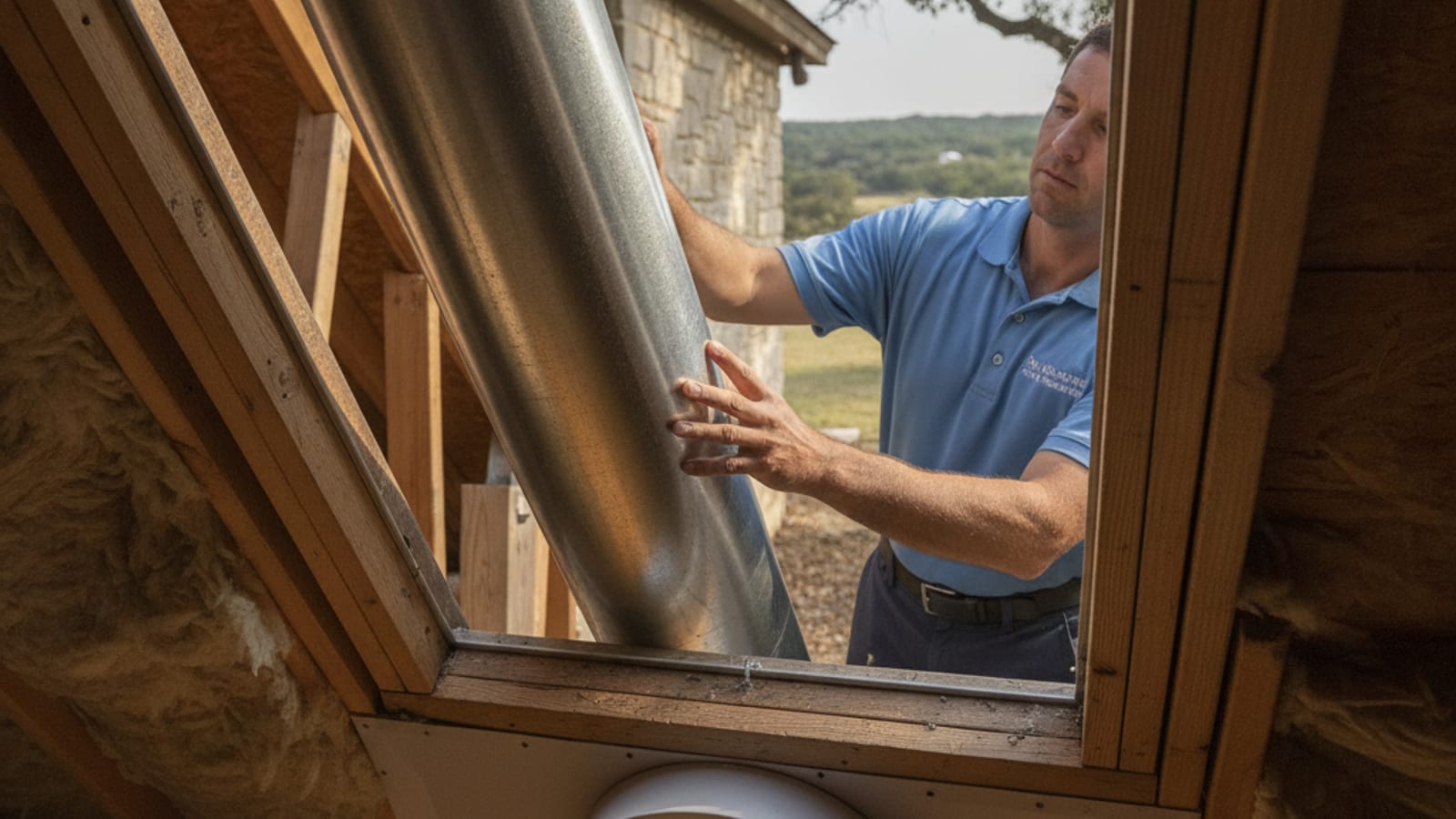
Solar tubes explained
A solar tube channels daylight into a dark room without cutting a full skylight opening.
Maintenance · 5 min watch
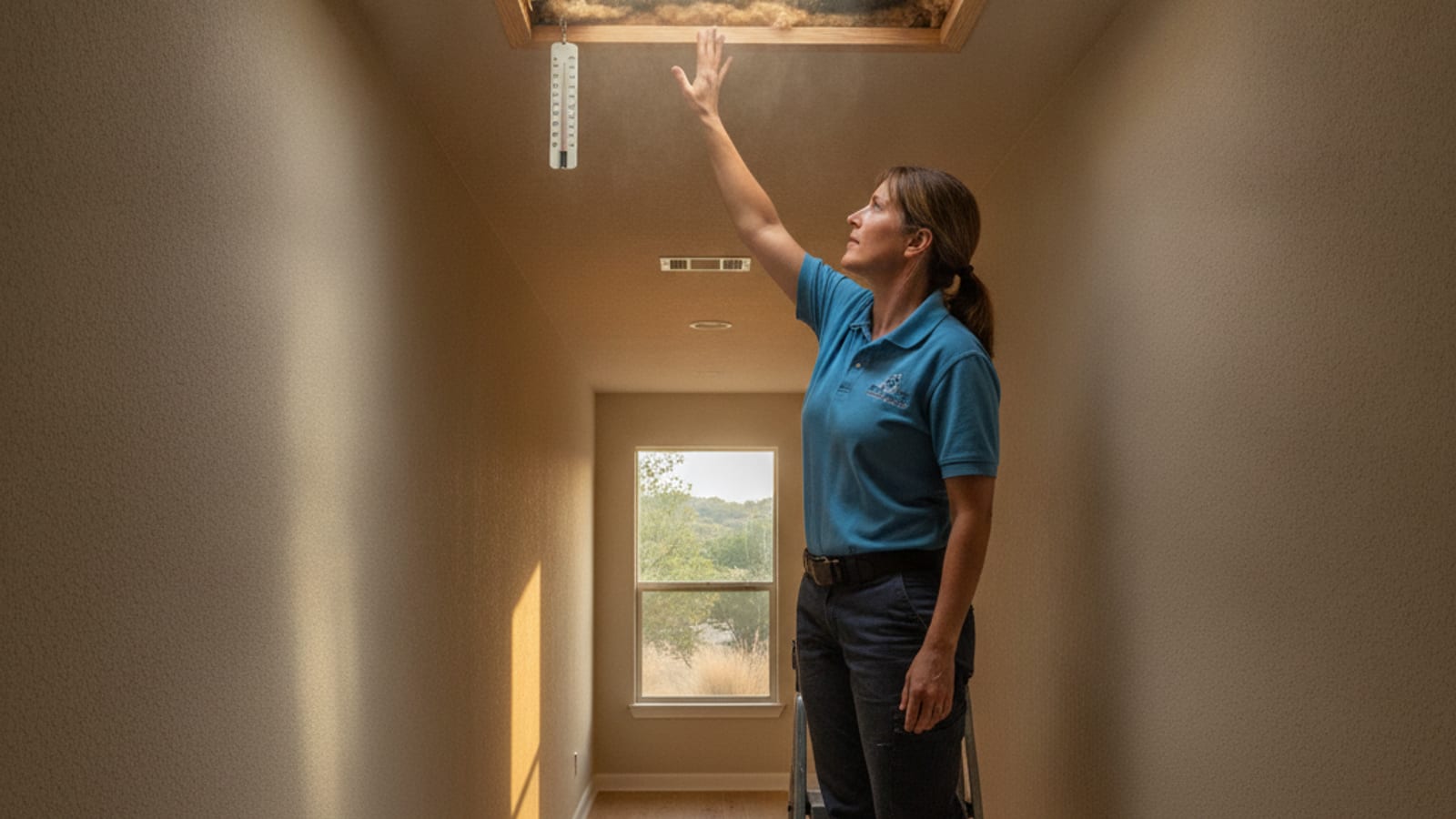
Beating attic heat
A hot attic pushes cooling costs up through the ceiling below it, ventilation is where that starts.