Whole house fan installation, Hill Country evenings without the AC bill.
A whole house fan pulls cool evening air through open windows and exhausts hot attic and interior air out through roof or gable vents, dropping indoor temperature fast once the outside air cools below the inside air. Central Texas evenings, especially in the Hill Country and Lake Travis area, cool off enough most of the year to make a whole house fan a real alternative to running AC overnight. The crew you're matched with sizes the fan's CFM to your home's actual square footage and confirms your attic has enough exhaust venting to support it.
Home square footage assessment and CFM sizing calculation
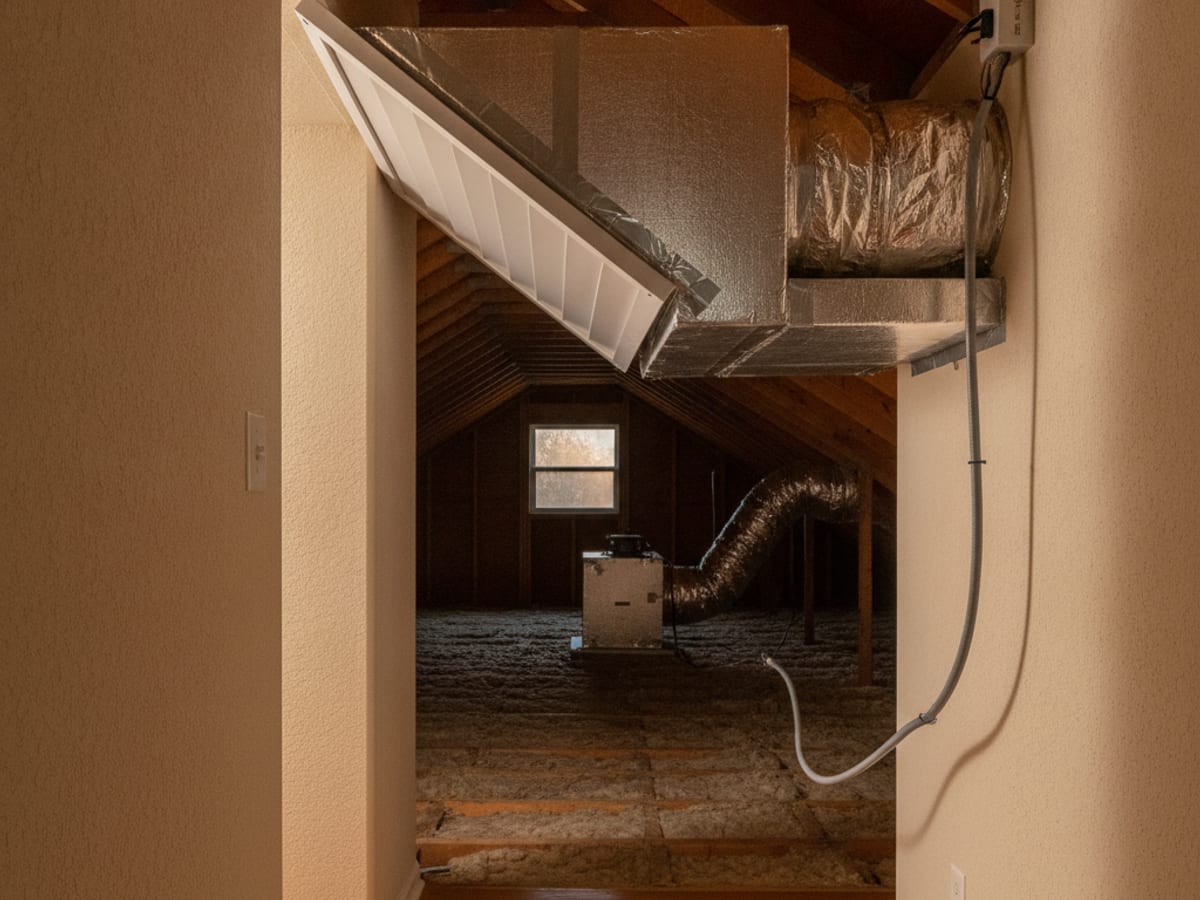
Ceiling-mounted fan installation in a central hallway or attic access point
Attic exhaust ventilation check, and additional venting where needed to support airflow
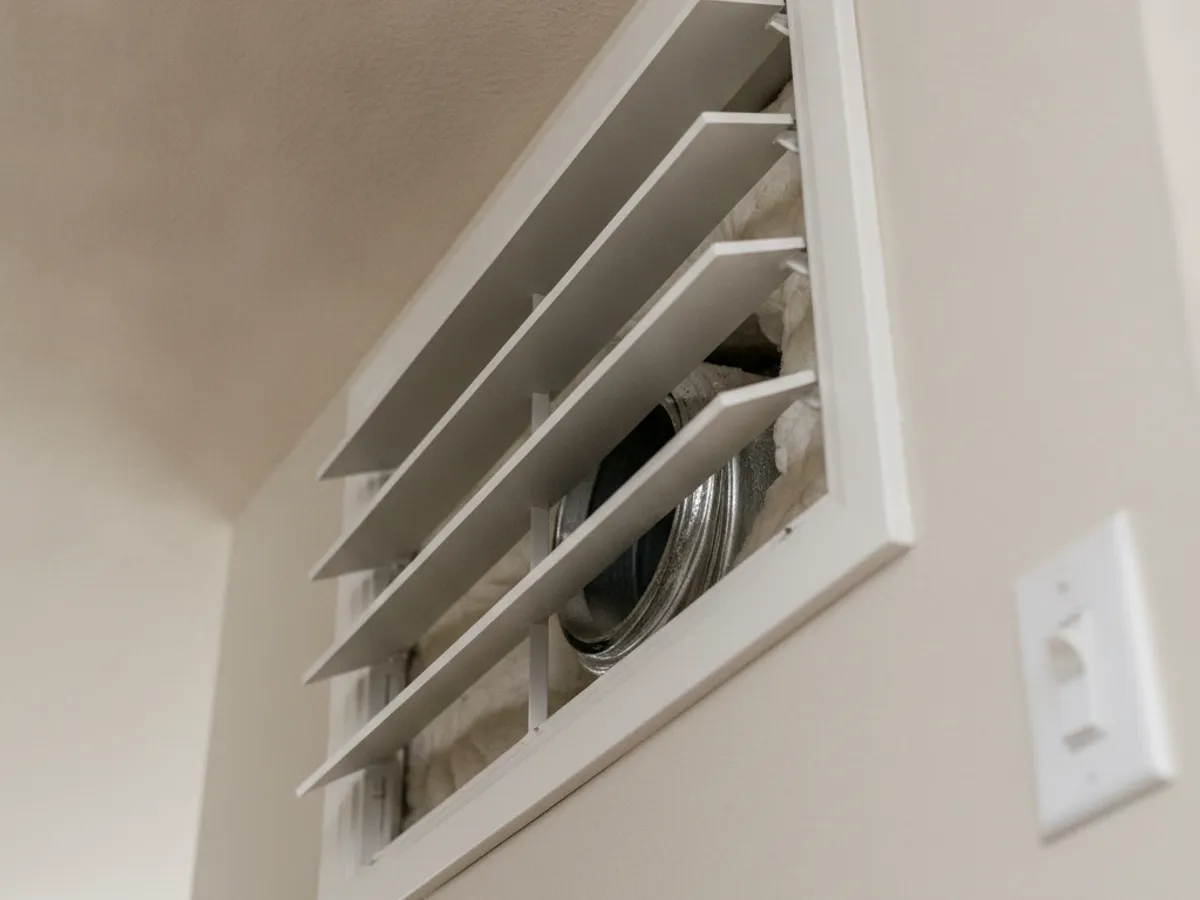
Insulated, motorized damper installation to seal the opening when the fan is off
Multi-speed and remote or smart-switch control options
Sound dampening and vibration isolation for quieter nighttime operation
Electrical hookup to a switched circuit near the fan location
Existing whole house fan replacement and upgrade for older, noisier units
When do you need this service?
Evening temperatures drop enough that AC feels unnecessary but the house stays stuffy
You want to cut cooling costs during spring and fall shoulder seasons
A two-story home traps heat upstairs even after the sun goes down
You already have an old, noisy whole house fan that needs replacement
You want to flush out cooking odors or stale indoor air quickly
Your Hill Country or Lake Travis home gets real evening cooling most of the year
What else is house fans called?
Homeowners search for this a few different ways. It also goes by whole house fan , and whole house fan installation . They all reach the same insured local crews, and the operator who answers
sorts out which one your job actually is.
Is there house fans near me in the Austin metro?
Yes, anywhere in the Austin metro. Bright Sky ATX is a referral service covering all
64 cities and communities in the metro, so "house fans near
me" has the same answer wherever you are: call (737) 477-8898 and we connect you with
an experienced, insured local crew who already works your area.
The reason that matters is that "near me" results are ranked by where Google thinks
you are, not by who is genuinely closest. A search from Georgetown and a search
from Kyle return different lists, and neither one tells you whether the company at
the top actually sends anyone to your street. One call gets you a crew that does.
If you would rather go straight to your own city, every house fans page in the
metro is linked below.
What do homeowners ask about House Fans?
How much does a whole house fan cost installed in Austin?
A standard whole house fan sized for an average home runs $1,200 to $2,200 installed. Larger homes needing higher CFM output, or attics that need added exhaust venting to support the fan, run $1,800 to $2,800. The crew calculates your square footage and checks attic venting before quoting.
Does a whole house fan work in Austin's climate?
Yes, especially in spring, fall, and much of the Hill Country and Lake Travis area where evenings cool off meaningfully even during summer months. A whole house fan works best once outdoor temperature drops below indoor temperature, typically evening through early morning, so it's most effective as a supplement to AC rather than a full replacement during the hottest weeks.
What size whole house fan do I need?
Sizing is based on your home's square footage and desired air changes per hour, a common target is a fan rated to move your home's total air volume every 2 to 3 minutes. A typical 2,000 to 2,500 square foot home usually needs a fan rated 2,500 to 4,000 CFM. The crew calculates the exact number for your home rather than using a standard size.
Will a whole house fan let hot attic air into my living space?
No, when properly installed. The fan pulls air from your living space up through the attic and out through roof or gable vents, moving air in the opposite direction from attic heat entering the house. An insulated, motorized damper seals the fan opening when it's off, which also prevents heat and cold transfer during the times you're not running it.
Is a whole house fan noisy?
Older whole house fans have a reputation for being loud, but current models use sound-dampened housings and vibration isolation that make them far quieter than the units from a decade or two ago. If you're replacing an old, noisy unit, most homeowners notice the difference immediately.
Service area
Where do we offer House Fans in the Austin metro?
We connect you with house fans crews in every city and community in
the Austin metro. Pick your city for local roof notes and service specifics.