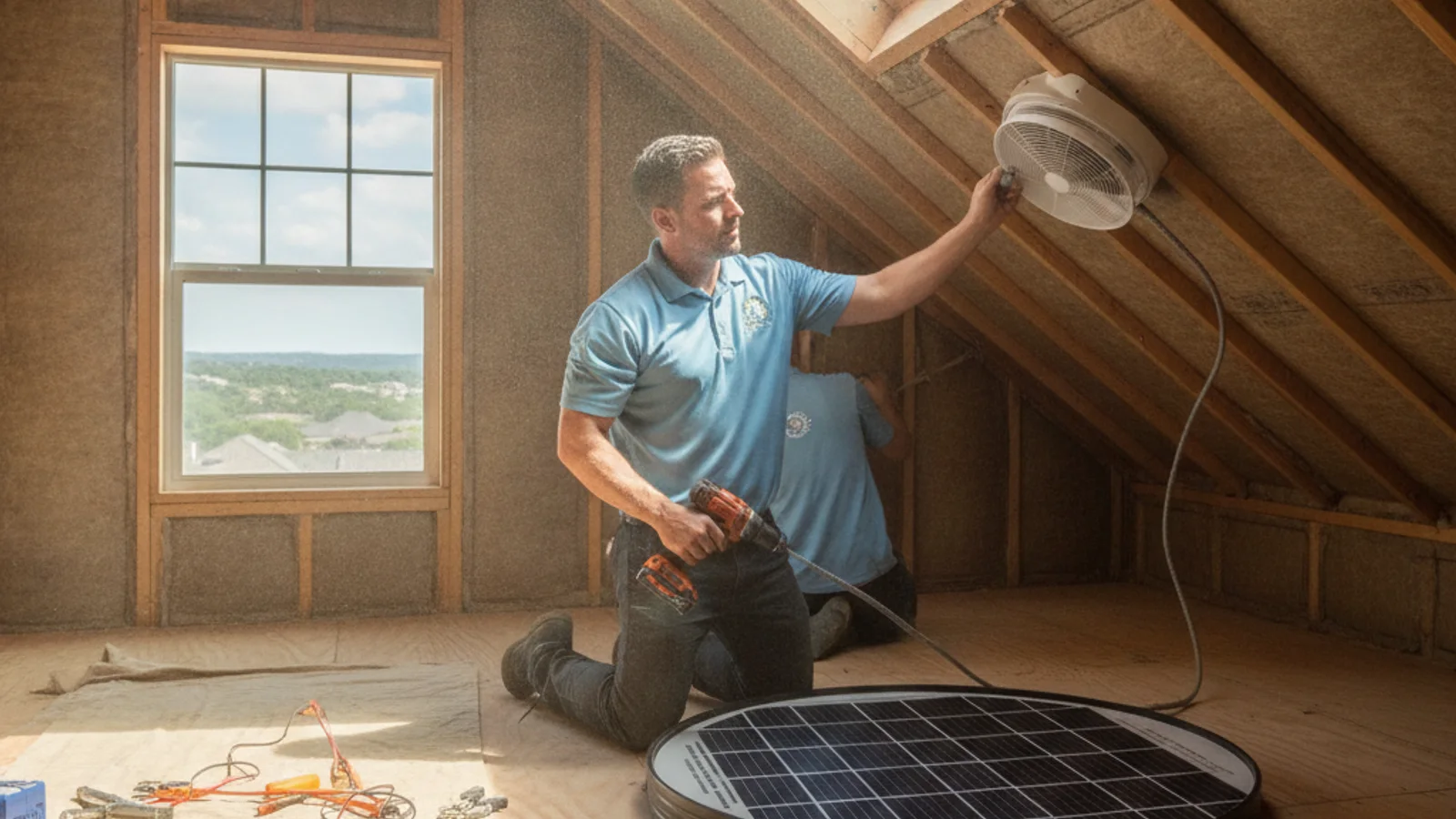
Solar attic fans typically cost more upfront than a comparable hardwired unit because of the added solar panel, but they skip the electrician wiring cost that a hardwired install usually requires. Total installed cost between the two often ends up closer than the sticker prices suggest, and the range depends on your specific attic and roof.
What actually moves the number
Fan capacity, measured in cubic feet per minute, needs to match the attic’s square footage, and an undersized fan won’t move enough air regardless of how it’s powered. Roof material and mounting method affect labor time, with a straightforward composition shingle roof generally faster to work with than tile or standing-seam metal. Whether new electrical wiring needs to be run for a hardwired unit is often the single biggest cost swing between the two options, since a home without existing attic wiring near the mounting location means running new circuit from scratch.
Solar vs. hardwired running cost
Once installed, a solar attic fan has no ongoing electricity draw, since it runs entirely off the panel. A hardwired unit draws a small amount of household power but has the advantage of running regardless of how much direct sun the roof gets that day, including on heavily overcast stretches when a solar panel’s output drops. Neither running cost is dramatic on its own, but the “no operating cost” pitch for solar genuinely holds up here, since the fan runs for free once installed rather than adding a small ongoing draw to the electric bill.
Where the labor time actually goes
Both fan types require a roof penetration and correct flashing around the housing, which takes the same care regardless of power source. A hardwired unit adds the additional step of running wire to a power source, either tapping into existing attic wiring or running a new circuit from the panel, which is the part of the job most likely to add unplanned time and cost if the attic wasn’t wired with this in mind originally.
Bundling with a re-roof
If a re-roof is already planned or underway, adding a solar attic fan installation at the same time avoids a second roof penetration and a second round of flashing work later. The same logic applies here as it does for adding a skylight during a re-roof: the roof is already open, so it’s the most efficient time to add a fan rather than treating it as a separate future project.
Why this matters more in Austin specifically
Austin-area attics commonly reach 120 to 150 degrees Fahrenheit at peak summer, which is the underlying heat problem an attic fan of either power type is meant to address. A fan that’s undersized for the attic, or one that fails and goes unnoticed for a season, means that heat keeps building unchecked and the home’s air conditioning system works harder to compensate. Getting the sizing and install right the first time matters more here than in a milder climate, simply because the stakes of an undersized or failed fan are higher.
Solar vs. hardwired, which one to choose
There isn’t a universal right answer. A roof with good, unobstructed sun exposure and no nearby power source makes solar the more practical choice, since it avoids the electrical work entirely. A roof with an existing electrical run already close to the mounting point, or one with significant shade from tree canopy that would limit a solar panel’s output, tips the calculation toward hardwired instead. This is worth walking through with an installer who can look at the actual roof and attic access rather than defaulting to one type across every home. If cooling the whole house, not just the attic, is the real goal, a whole house fan installation is worth pricing alongside an attic fan, since the two solve related but different problems.
Are solar attic fans worth the extra cost?
Often, yes, particularly on a roof with good sun exposure and no convenient existing wiring nearby. The upfront cost difference narrows once you factor in what running new electrical service for a hardwired unit would add.
Does a hardwired attic fan need a dedicated circuit?
It depends on the home’s existing electrical setup and local code requirements. Some installs can tie into existing wiring, while others need a new dedicated circuit run, which adds to the total cost.
How long does attic fan installation take?
Most single-fan installs on an accessible roof take a matter of hours to complete in a single visit. Additional wiring work for a hardwired unit, or a more complex roof, can extend that.
Getting an accurate number for your roof
The real cost depends on your attic’s size, your roof material, and whether new wiring is needed, which is why a firm number comes from a roof walk rather than a phone estimate. Bright Sky ATX connects Austin homeowners with experienced, insured local crews for solar and hardwired attic fan installation alike. Call (737) 477-8898 for a free estimate.