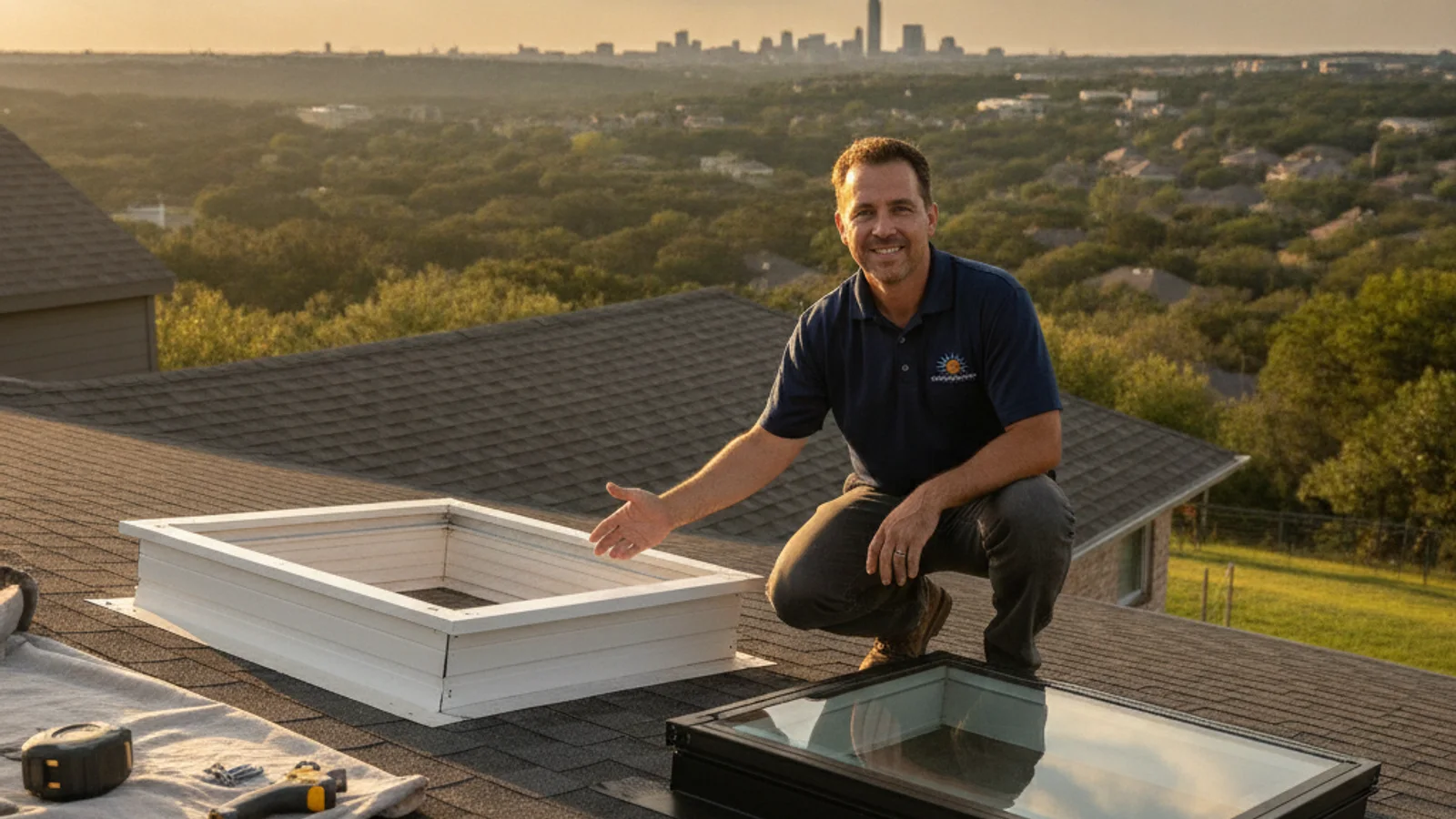
Deck mount sits directly on the roof deck and works on most pitched shingle roofs. Curb mount sits on a raised frame, called a curb, built up from the deck, and it’s required on flat or low-slope roofs and often preferred on metal roofs. The roof itself usually decides which method applies before cost or preference even enter the conversation.
What each method actually looks like
A deck-mounted skylight has a low profile, sitting nearly flush with the surrounding shingles once installed. It’s the simpler, more common method on a standard pitched roof, where gravity does most of the work moving water off the surface and away from the unit. A curb-mounted skylight sits raised above the roof surface on a built-up wooden or insulated frame. That raised frame exists for one reason: to keep the skylight’s seal well above where water can pool, which becomes critical the flatter a roof gets.
Why the curb exists in the first place
On a pitched roof, rain runs off quickly and rarely has a chance to sit near a rooftop penetration. On a flat or low-slope roof, water drains slowly and can pool right where a flush-mounted unit would sit, which is exactly the setup that invites a leak. Raising the skylight on a curb lifts the seal above that standing-water line, giving the water somewhere to go around the unit instead of against it.
The cost difference
Curb mount typically costs more than deck mount, mainly because of the extra framing lumber, the additional flashing work, and the longer install time needed to build and flash the curb correctly. On a straightforward pitched shingle roof, deck mount is usually the more economical and faster choice, which is part of why it’s the default on most standard installs.
Which roofs force one or the other
A flat or low-slope roof requires curb mount, full stop. There isn’t a workable deck-mount alternative once the pitch drops low enough that water can’t reliably run off, which is part of why flat roof skylights are treated as their own category with their own installation approach. A standard pitched shingle roof defaults to deck mount, though curb mount still shows up on some metal-roof kits, where the flashing profile needed for a standing-seam roof sometimes fits a curb-mounted approach better than a flush deck mount.
Leak risk, compared honestly
A properly built curb is generally considered more leak-resistant on a low-slope roof specifically, because it’s solving the exact drainage problem that roof type presents. On a standard pitched roof, deck mount is simpler to install correctly and, done right, holds up just as well. Neither method is inherently more leak-prone than the other. What matters more is whether the method matches the roof it’s going on, and whether the flashing was done correctly for that roof’s material.
Retrofitting during a re-roof
If an older deck-mounted skylight sits on a roof that’s being re-roofed anyway, that’s often the right window to reconsider the mount type, particularly if the roof has any low-slope sections or if the homeowner is switching to metal. Converting mount types outside of a re-roof project means cutting into an already-finished roof, so most homeowners wait for a natural re-roof or replacement window to make that change.
Getting the right method for your roof
Most tract housing across the Austin metro defaults to a 4:12 roof pitch, with 6:12 also common, which is squarely in deck-mount territory. Homes with flatter mid-century rooflines or commercial buildings with genuinely flat roofs are a different story, and that’s where curb mount becomes the standard rather than the exception. A skylight installation crew evaluates the actual pitch and roofing material before recommending either method, since guessing from a photo isn’t reliable enough for a decision that affects how well the unit sheds water for the next decade or more.
Is curb mount always more expensive?
Generally, yes, due to the added framing and flashing labor. The gap narrows on a straightforward curb build and widens on a more complex roof with obstructions or an unusual pitch transition.
Can a deck-mount skylight go on a metal roof?
Sometimes, depending on the specific metal roofing profile and the flashing kit available for it. Standing-seam metal roofs often work better with a curb-mount approach, though this depends on the manufacturer’s flashing options for that seam profile.
Which method do most Austin installers use on a standard tract roof?
Deck mount, since most tract housing across the metro sits at a standard pitch where a flush-mounted unit sheds water reliably without the extra cost of building a curb.
Talking through your roof’s specifics
The right mount method depends on your actual roof pitch, material, and layout, not a general rule that applies to every home. Bright Sky ATX connects Austin homeowners with experienced, insured local crews who evaluate your roof on site before recommending curb or deck mount. Call (737) 477-8898 for a free estimate.