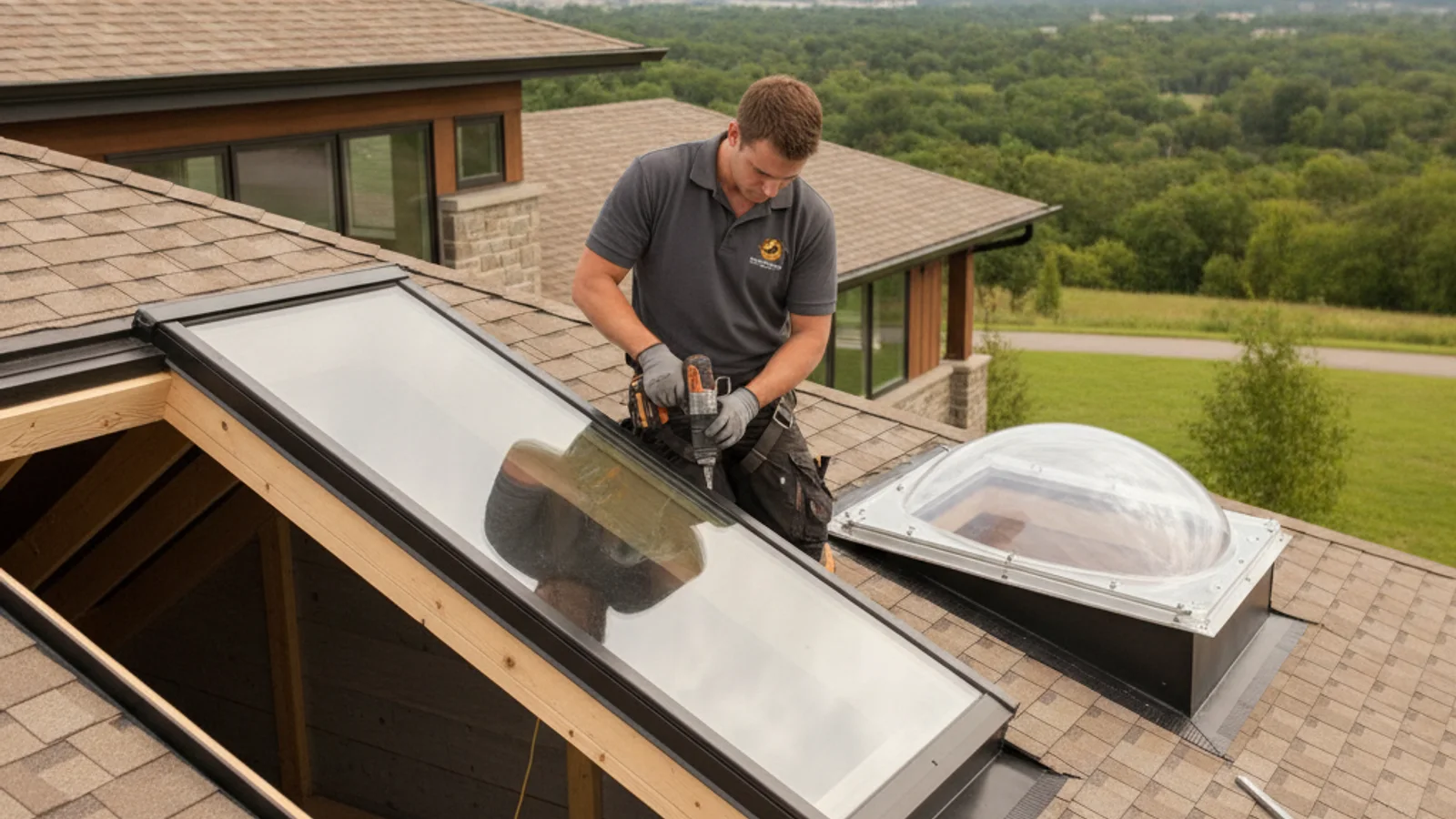
A roof window is built to open and function like a walk-up window on a low-slope roof, often used for loft or attic-conversion ventilation and sometimes for emergency egress. A fixed skylight is built for daylight, and on vented models, occasional airflow, but not for routine walk-out access. The two look similar from the ground and get confused constantly, but they’re built for different jobs.
Ventilation is the real dividing line
A roof window is designed to open wide and move real air through a space, closer to what a whole house fan or attic fan accomplishes than what a fixed skylight can offer. This matters most in an attic conversion, where the space needs a genuine airflow source that a standard vented skylight, built mainly to release some heat and humidity, isn’t sized to provide on its own.
When a roof window is required, not optional
In a habitable attic conversion, code often requires an emergency escape and rescue opening from any room used as a bedroom. A roof window sized correctly can satisfy that requirement in a space where a standard wall window isn’t structurally possible. This is a genuinely different situation from choosing a roof window for daylight or ventilation preference. It’s a code requirement tied specifically to converting attic storage into habitable living space.
Cost and structural differences
Roof windows are typically framed to support foot traffic and built with larger openings than a standard fixed skylight, both of which add to material and labor cost. A skylight installation framed purely for daylight in an existing room is generally the more economical option when egress and structural walk-access aren’t factors in the decision.
Where each one fits in an Austin project
A skylight is the right call for adding daylight to an existing, already-habitable room, a kitchen, living room, or hallway that just needs more natural light. A roof window is the right call specifically for a genuine attic-to-living-space conversion, where ventilation, potential egress requirements, and the room’s new habitable status all come into play at once. Confusing the two on a conversion project can mean discovering partway through that a fixed skylight doesn’t satisfy the code requirement the new bedroom actually needs.
Energy code applies to both
Both roof windows and fixed skylights are held to the same residential glazing standards under Austin’s building code. Under the 2021 IECC Climate Zone 2 code that Austin has adopted, residential skylight glazing is held to a U-factor of 0.60 and an SHGC of 0.28, with NFRC labeling required to verify the rating. Whichever product ends up in the roof, the glazing performance requirement doesn’t change based on whether it opens or not.
Working with the right installer for the job
For a straightforward daylight upgrade, a standard skylight crew handles the job start to finish. For an attic conversion involving roof windows, the project usually needs closer coordination with a permitting review, since the scope of work goes beyond a single roof penetration into a full change of the space’s use. It’s worth being upfront about which situation applies when getting quotes, since the two projects aren’t priced or scoped the same way.
Can you walk on a roof window?
Most roof windows are framed and built to support occasional foot traffic for maintenance or emergency access, unlike a standard fixed skylight, which is not designed to bear weight.
Is a roof window always required for an attic conversion?
Not always, but it’s often required when the conversion creates a habitable room, particularly a bedroom, that needs a code-compliant emergency escape and rescue opening and doesn’t have another way to satisfy it.
Do roof windows cost more than skylights?
Generally, yes. The larger opening size and the structural framing needed to support foot traffic both add to the cost compared to a standard fixed skylight built purely for daylight.
Getting the right fixture for your project
Whether the project calls for a daylight-only skylight or a functional roof window depends on what the space is actually being used for. Bright Sky ATX connects Austin homeowners with experienced, insured local crews for both. Call (737) 477-8898 for a free estimate.