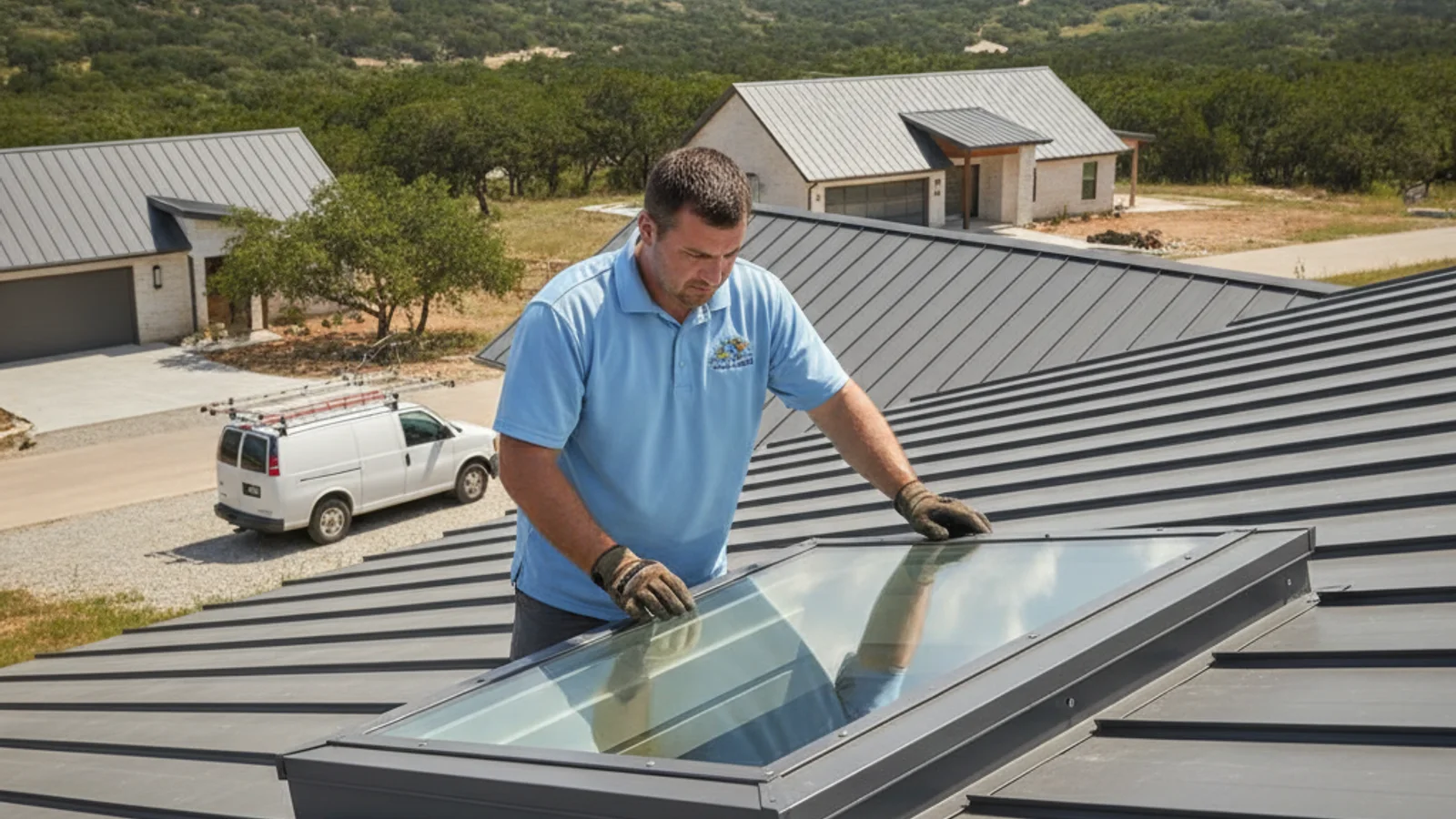
Skylights and solar tubes install on Hill Country custom metal roofs the same way they do anywhere else on standing-seam metal. What changes isn’t the flashing method, it’s everything around it: steep pitch, remote acreage, and jurisdiction questions a suburban tract install never has to deal with.
The housing stock
Western Dripping Springs is largely acreage custom homes, many built in the 1980s and 90s, with standing-seam metal roofing common across the area. Driftwood, just south, is unincorporated Hays County, and its custom homes typically sit on 5 to 20-plus acre lots, built in Tuscan-style or sprawling Texas-ranch architecture with native cut limestone or stucco facades, and metal or tile roofing. Neither community looks anything like Circle C or Allandale, and neither does the install work that follows from it.
Roof pitch reality here
Hill Country customs commonly run 7/12 to 9/12 pitch, meaningfully steeper than a standard suburban 4:12 to 6:12 tract roof, with some builds in the wider West Lake Hills area running as steep as 8/12 to 12/12. That steepness changes how a crew accesses the roof and plans safety equipment for the job, and it’s a real factor in scheduling and crew experience that a flatter tract roof never introduces.
The jurisdiction wrinkle specific to this belt
Dripping Springs is an independent incorporated city with its own extraterritorial jurisdiction, and some properties within that ETJ require planning review even without a full city building permit. The exact requirement depends on the specific address, not the general area, so this is a case worth verifying before assuming either way. ETJ skylight permitting in Austin covers the mechanics of how ETJ jurisdiction works, which applies to this same kind of situation around Dripping Springs.
Why a vaulted great room is a strong sell here
Custom Hill Country homes frequently include a vaulted great room, and a well-placed skylight in that kind of ceiling delivers a dramatic amount of direct daylight and a genuine view of sky, exactly the kind of feature a custom home’s architecture is built to showcase. This is a different economic driver than the retrofit logic pushing sales in Central Austin’s older bungalow stock; here, it’s often part of the original design vision rather than a fix for a dark room.
Solar tubes for the rooms without vaulted ceilings
Not every room in a large custom home has a dramatic ceiling worth a full skylight. Interior rooms, closets, and utility spaces in these homes still benefit from a solar tube, delivering daylight with far less roof disruption and cost than a full skylight in a space that doesn’t call for one.
Do Hill Country custom homes need special equipment for a steep-pitch metal roof install?
Often yes. A 7/12 pitch or steeper roof requires different safety equipment and crew experience than a standard tract roof, which is worth confirming with any installer bidding the job.
Does Driftwood permit through Hays County or a city?
Driftwood is an unincorporated Hays County census-designated place, so permitting there generally runs through the county rather than a city building department, though this should be verified for the specific address before assuming.
Is tile or metal more common on these homes?
Both appear across Driftwood and Dripping Springs custom construction, with metal, especially standing-seam, common on many builds alongside tile on others. The specific roof material shapes which flashing method a skylight or solar tube install uses.
Planning a Hill Country install
Bright Sky ATX connects Dripping Springs and Driftwood homeowners with experienced, insured local crews who work on steep-pitch metal roofs regularly. Call (737) 477-8898 for a free estimate on skylight installation or solar tube installation.