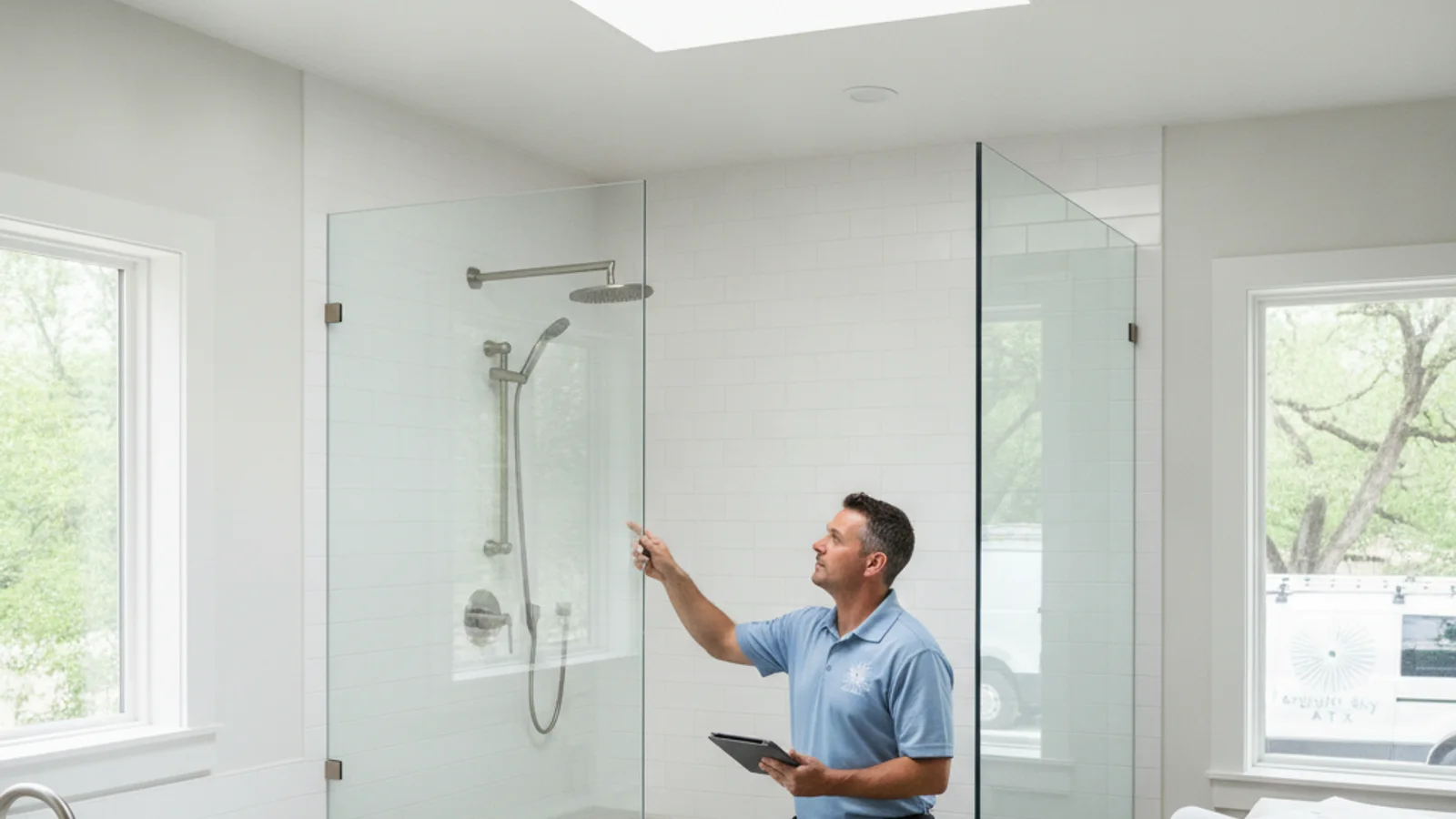
A skylight can go over a shower, but it needs adequate ventilation nearby, and in many cases it needs tempered or laminated safety glazing given how close it sits to a wet, occupied space below. It’s a common request in bathroom remodels, and it’s a fully workable one when the planning happens up front rather than after the glass is already in.
Moisture risk is a ventilation problem, not a skylight problem
The humidity buildup that leads to fogging or drips around a bathroom skylight almost always traces back to inadequate exhaust, not the skylight itself. A properly sized bathroom fan that’s actually run during and after showers clears steam before it has a chance to condense on a cooler ceiling surface. We cover the full test for telling condensation from an actual leak in a separate post, and the short version applies here too: moisture that shows up with no rain outside is almost always a humidity issue, not a roof problem.
Glazing choice matters more directly over a shower
“Safety glazing” means tempered or laminated glass designed to resist breakage and, if it does break, to do so in a way that doesn’t shower sharp fragments below. Because a skylight over a shower sits directly above someone standing in a fixed spot, most codes and most reputable installers treat this as a non-negotiable rather than an upgrade option. It’s worth confirming this detail is included in any quote for this specific placement, since it’s not automatically the default on every skylight product line.
Vented or fixed: does opening it help or hurt
A vented skylight can exhaust some steam directly, but it also opens a path for outside humidity and, during Austin’s rainy stretches, the occasional wind-driven mist. For a shower specifically, most installers lean toward a fixed unit paired with a properly sized exhaust fan rather than relying on the skylight itself to vent moisture. A vented unit still has its place in other rooms; it’s just not usually the first tool reached for directly over a shower stall.
Placement changes the equation
A skylight directly over the shower puts light exactly where it’s wanted but concentrates both the glare and the moisture exposure in one spot. Offsetting the skylight over the broader bathroom, rather than the shower stall itself, spreads the daylight across the room and reduces the direct exposure question without losing much of the light benefit. Which placement makes more sense usually comes down to the bathroom’s layout and where the ceiling framing actually allows a rough opening.
What a good install checks before work starts
A contractor should look at the existing exhaust fan’s capacity relative to the bathroom’s square footage before finalizing the plan, since a skylight added on top of an already-undersized fan just makes an existing ventilation problem more visible. The attic ventilation path above the bathroom matters too. If the attic itself doesn’t breathe well, moisture that escapes the room can linger around the skylight’s framing longer than it should. This is exactly the kind of thing worth walking through with an installer before signing off on a specific glazing package, since Austin’s humidity swings make ventilation planning a real factor here rather than a formality. Average annual rainfall runs 35.8 to 36.4 inches over about 86 rainy days, with real seasonal humidity swings in between.
Working it into a remodel
If a skylight over the shower is part of a larger bathroom remodel, it’s worth sequencing the skylight installation alongside any exhaust fan upgrade rather than treating them as separate projects. Doing both at once means the attic is already open and the drywall is already coming down, which usually saves labor time compared to adding a fan upgrade later as its own job. Once the skylight is in, adding skylight blinds or shades is worth considering too, both for privacy from above on a two-story layout and for controlling glare and heat gain during Austin’s brighter months.
Does a skylight over a shower need special glass?
In most cases, yes. Tempered or laminated safety glazing is the standard choice for a skylight placed directly above a fixed standing area like a shower, given the consequences if the glass were ever to fail.
Will steam fog the glass every time?
Not if the bathroom’s ventilation is properly sized and actually used. Occasional light fogging during a hot shower is normal on most glazing. Persistent fogging that lingers well after the shower ends usually points to an exhaust fan that isn’t clearing humidity fast enough.
Can an existing bathroom skylight be retrofitted with better venting?
Often, yes. Upgrading the bathroom’s exhaust fan capacity is usually a separate, more affordable project than replacing the skylight itself, and it’s the first thing worth checking if an existing skylight over a shower has started fogging or dripping.
Planning the project right
Getting the glazing, placement, and ventilation right from the start is what makes a skylight over a shower work long term instead of becoming a maintenance headache. Bright Sky ATX connects Austin homeowners with experienced, insured local crews who can walk through the layout and ventilation questions specific to your bathroom before any work starts. Call (737) 477-8898 for a free estimate.