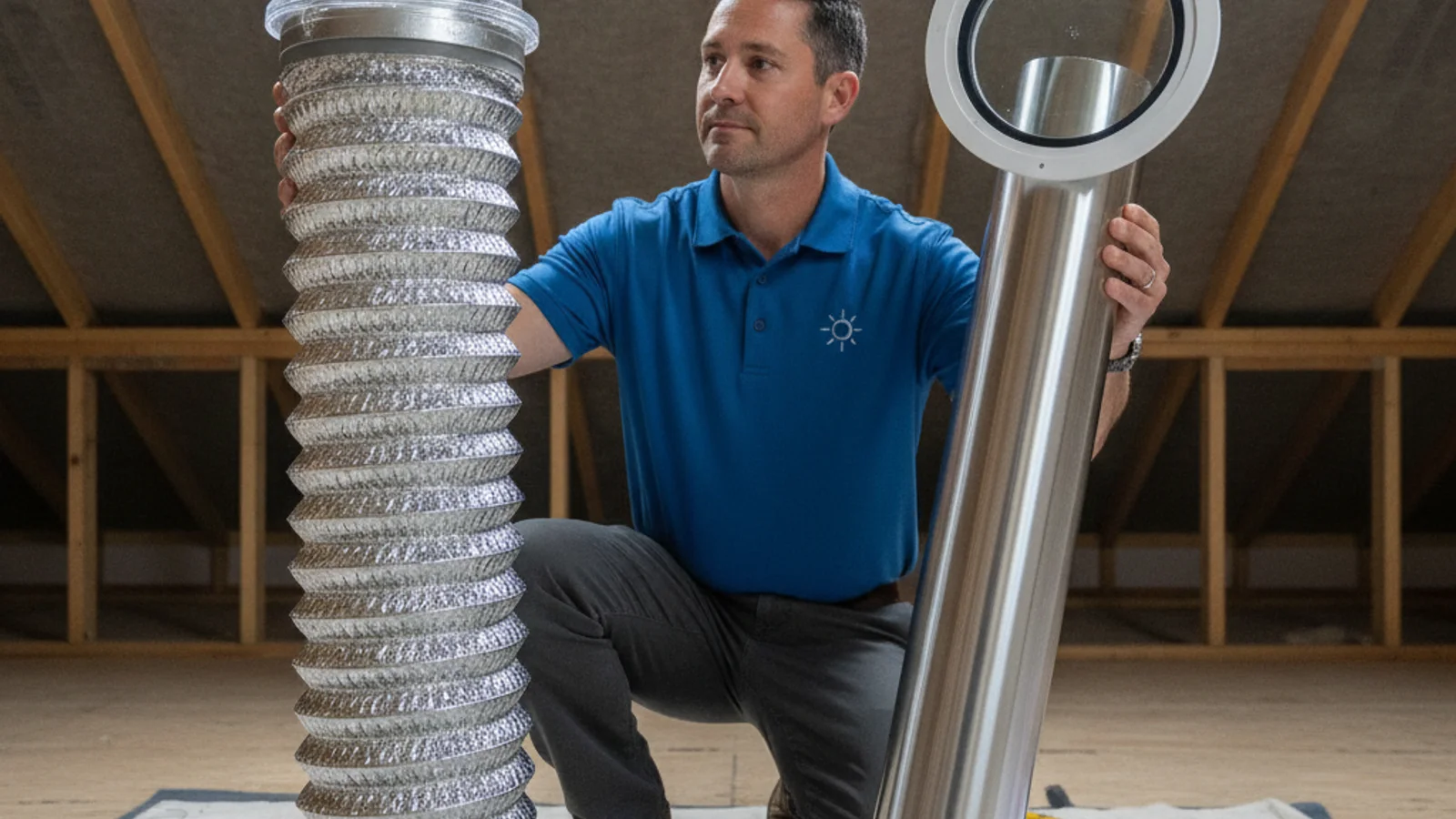
Solatube and Velux Sun Tunnel are both well-established tubular daylighting brands built around the same core mechanism: a rooftop dome, a reflective tube through the attic, and a ceiling diffuser that spreads daylight into the room below. The real decision points aren’t which name is on the box. They’re diffuser style, accessory options like dimmers and light kits, and which brand your chosen installer actually has training and experience on.
What each brand is generally known for
Both companies have built long track records in the tubular daylighting category, and both offer product lines spanning basic fixed units up through models with added features like light kits and integrated ventilation fans. Rather than repeating manufacturer marketing claims as settled fact, the useful comparison is on the practical details that actually affect your install and your day-to-day experience with the fixture.
Tube rigidity and flexible options
One real technical difference between tubular daylighting products, across brands, is whether the tube run uses rigid sections, a flexible tube, or a combination of both. Rigid tube reflects light more efficiently over a given distance, which matters more on a longer attic run. Flexible tube is easier to route around obstructions like framing members or HVAC ductwork in a tight or complicated attic. Which combination makes sense for your specific roof depends on the attic layout more than it depends on brand loyalty, and a good installer will make that call based on what they find during the attic inspection.
Accessory ecosystems
Both brands offer accessory options along similar lines: electric light kits that let the same fixture provide light after dark, dimmer controls, and in some product lines, integrated ventilation fans that combine daylighting with attic or bathroom exhaust in one fixture. The specific feature set and how those accessories integrate varies by brand and by product tier within each brand, which is worth reviewing directly with whichever installer you’re working with rather than assuming one brand’s accessory lineup automatically beats the other’s.
Diffuser style and how light actually looks in the room
The ceiling diffuser is the part of the fixture you actually see and live with day to day, and diffuser style varies across both brands’ product lines. Some diffuser designs prioritize maximum brightness and a more direct, sun-like quality of light. Others prioritize softer, more evenly spread illumination that reads closer to a large window on an overcast day. Neither approach is objectively better; it comes down to what you want the room to feel like, and it’s worth asking to see the actual diffuser options rather than choosing based on brand reputation alone.
Warranty and service considerations that matter more than the name on the box
A tubular daylighting fixture is a long-term part of your roof, and how a warranty claim actually gets handled years down the road matters as much as the sticker price at install. Both brands offer warranty coverage on their hardware, but how smoothly a claim resolves in practice often depends more on your installer’s relationship with the brand and their responsiveness than on which name is on the unit. An installer who’s sold and serviced a particular brand consistently for years typically has a more established process for handling a warranty issue than one working with a brand they rarely touch.
Installation quality is the real variable
Across both brands, the single biggest factor in how a tubular daylighting fixture performs over its lifetime is installation quality, not brand selection. A well-installed unit from either manufacturer, with correctly matched flashing for the roof type and a properly sized tube run for the attic distance, delivers strong daylight performance and a leak-free seal for years. A poorly installed unit from either brand can underperform on light output or develop a leak regardless of how well-engineered the product itself is. That’s the real reason installer experience deserves more weight in this decision than brand comparison alone.
Why “which is better” is the wrong question locally
The honest answer to which brand is better is that it matters less than which brand your installer actually installs well and can properly warranty. A sun tunnel installation done correctly, with the right flashing method for your specific roof and a tube run sized properly for the distance, performs well regardless of brand. A poorly executed install on either brand’s product creates the same leak and light-loss problems either way. If your installer has deep, repeated experience with one brand specifically, on your kind of roof, that experience often matters more than a spec-sheet comparison between the two.
How to think about the decision if you’re starting from scratch
If you’re just beginning to research tubular daylighting and haven’t yet picked a brand, a more useful starting point than a brand comparison is figuring out what your room actually needs. How long is the likely attic run from roof to ceiling. Does the room need a light kit for nighttime use, or is daylight-only sufficient. Is the space a straightforward, short, direct run, or does it have obstructions that call for more flexible tube routing. Answering those questions first narrows down which brand and product tier actually fits your situation, and at that point, the brand comparison becomes a much smaller and more concrete decision than it feels like at the start of the process.
Cost differences, described generally
Pricing between the two brands moves around based on model tier, tube diameter, accessory selection, and your specific installer’s pricing, more than it moves based on brand name alone. Rather than quoting a specific dollar figure tied to either brand here, the more useful approach is comparing quotes for the exact configuration you need, apples to apples, once you’ve narrowed down the accessory features that actually matter for your room.
Where Bright Sky ATX stands on this
Bright Sky ATX is an independent local resource connecting Austin homeowners with experienced, insured installers, not a dealer for either brand specifically. That’s worth saying plainly here, because it means this comparison isn’t steering you toward one name over the other. It’s steering you toward asking the right questions of whoever you’re getting a quote from: what brand do they install most often, what’s their warranty process look like in practice, and does their answer match what your specific room and roof actually need.
Questions worth asking during a quote, regardless of brand
Rather than researching each brand’s spec sheet in isolation, a more productive approach is bringing a short list of questions to whichever installer you’re getting quotes from: which brand do they install most often and why, what does a typical warranty claim look like in practice, how do they decide between rigid and flexible tube on a given attic run, and what accessories do they recommend for your specific room. The answers to those questions tell you more about how the actual installation will go than a side-by-side brand comparison sheet ever could, since the same product installed by two different crews can produce noticeably different long-term results.
Is one brand definitively brighter than the other?
Not as a blanket rule. Actual brightness depends more on tube diameter, tube length, the number of bends in the run, and roof orientation than it does on brand alone. A shorter, straighter run on either brand outperforms a long, obstructed run on the other.
Do both brands offer the same warranty structure?
Warranty terms vary by brand and by specific product line within each brand, and they can also depend on whether the installer is certified or authorized for that brand’s warranty program. It’s worth asking your installer directly what warranty applies to the exact unit and installation they’re proposing.
Does it matter which brand my installer is certified on?
It can matter for warranty coverage and for how confidently they can troubleshoot a given product’s specific hardware. An installer with deep repeated experience on one brand, done correctly and consistently, is often a better bet than a generalist working with an unfamiliar brand for the first time on your roof.
Getting the right fit for your home
If you’re weighing brands, the more productive conversation is with a local installer about which product and configuration fits your specific room and roof. Bright Sky ATX connects Austin homeowners with experienced, insured local crews for solar tube installation and sun tunnel installation alike. Call (737) 477-8898 for a free estimate.