On a July afternoon in South Austin, a hallway diffuser can feel warm under your palm. That does not mean the tube is dumping attic air into the room. A solar tube can add a little solar heat with the daylight. It is not an HVAC path when the kit is sealed at the roof and at the ceiling.
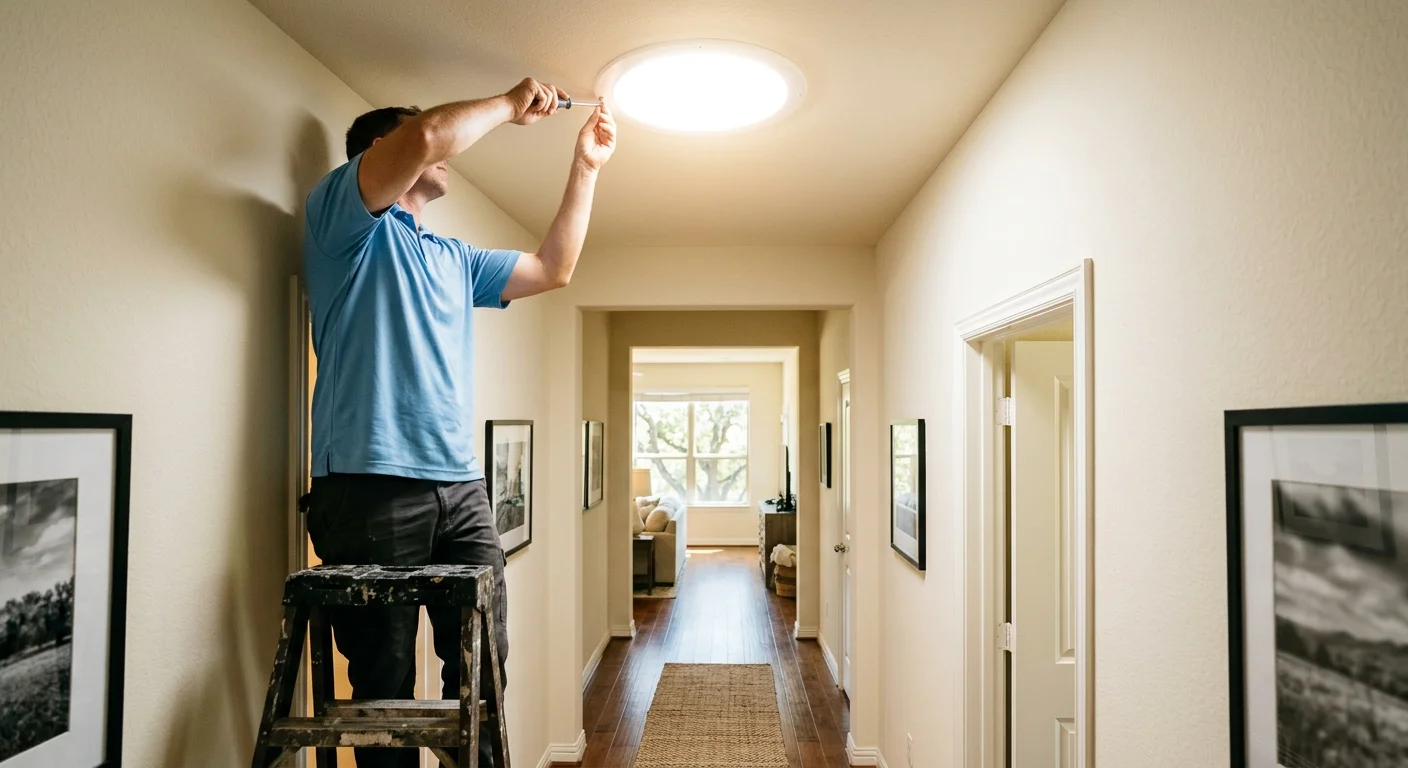
How a solar tube moves light, not HVAC air
A solar tube (also sold as a sun tunnel or tubular skylight) is a small roof dome, a reflective shaft through the attic, and a ceiling diffuser. Sunlight hits the dome. The tube bounces that light down. The diffuser spreads it into a hall, bath, closet, or interior kitchen. That is the whole job: move daylight, not room air.
The tube is closed at both ends when it is installed as designed. The dome sits in the roof. The lens sits in the ceiling. The shaft in between is a sealed column, not a vent. Hot attic air should stay in the attic. Cool room air should stay in the room. If you feel a breeze at the diffuser, something is wrong with the seal, not with the idea of daylighting.
That is also why a solar tube is not a solar panel. Panels turn sunlight into electricity. Tubes only pipe visible light (and some of the sun’s heat that rides with it). They do not need heat to work. They need sky.
Sun tunnels work the same way. Different brands use different names. The physics is the same: light in a tube, air kept out of the living space. Bright Sky ATX matches homeowners with independent, insured pros for solar tube installation and sun tunnel installation across Travis, Williamson, and Hays counties. The pro you are matched with contracts with you directly. The brand does not run crews or own trucks.
A whole-house fan or a solar attic fan is a different machine. Those devices move air on purpose. A tube does not. If your attic is cooking and you want that heat out of the roof, that is a ventilation question, not a daylighting one. Keep the two jobs separate when you plan the roof.
Rigid tubes carry light with fewer bounces than a wrinkled flex tube. Flex kits still have a place when the attic is a maze of ducts. Neither type is supposed to be an open chimney. Ask the installer to show you how the ceiling ring, tube joints, and roof flashing will be sealed before anyone cuts the drywall.
Where extra heat can actually come from
Sunlight is not only brightness. Some of the energy in that beam is heat. A tube that delivers a lot of daylight will also deliver some of that solar load. You may feel it as a warm diffuser on a clear August day, especially on a west slope that sees sun from lunch until late afternoon.
That is solar heat through the kit. It is not attic air pouring in. The difference matters. A failed seal, a missing gasket, or a gap around the ceiling ring can pull hot attic air into the room. That feels like a leak of heat, and it often shows up with dust or a smell of insulation. If the diffuser is also wet after a storm, treat it as a water-path problem and read do solar tubes leak before you blame the sun.
A dark flex tube draped across a 140-degree attic can pick up heat by contact. The tube wall is not magic insulation. Specific R-values and temperature drops for a given kit could not be confirmed in the approved facts for this site. Read the manufacturer’s labeled U-factor and solar heat gain figures, then have an independent installer look at tube length, attic temperature, and how the shaft is wrapped or left bare.
Other real sources of extra warmth:
- A west-facing dome on a dark shingle roof in Round Rock or Pflugerville, where the roof skin runs hot all afternoon.
- A short run in a Hyde Park or Allandale bungalow, where the attic is shallow and the tube has less length to sit in.
- A large-diameter kit over a small interior bath, where the light (and its heat) is concentrated in a tight volume.
- Insulation pulled back from the ceiling ring and never put back, so the drywall around the diffuser becomes a warm patch.
A full glass skylight is a bigger hole in the roof. More glass usually means more solar load unless the glazing is chosen for heat. That is why a hallway that only needs light often takes a tube, while a living room that wants a view takes a skylight with the right glass. Do not guess the numbers off a brochure. Confirm them on the product label.
The U.S. Department of Energy treats roof glazing as part of the home’s heating and cooling load. Light you want. Uncontrolled solar gain you plan around. A sealed tube is a small opening. A leaky tube is a small opening plus an air leak. Fix the air leak first.
How Austin sun and roof color change the feel
Austin is not one climate at roof level. The City of Austin residential energy code uses Climate Zone 2. For skylights, the published maxima in the 2024 energy-code tables are a U-factor of 0.60 and an SHGC of 0.28, for both existing buildings and new construction. Those figures are for skylights in the city’s tables. A solar tube’s own labeled ratings were not confirmed in those same published rows, so you still have to read the spec sheet for the kit on your roof.
West Austin and the Hill Country see long, hard sun on metal roofs. A dark standing-seam roof in Dripping Springs or Bee Cave runs hotter to the touch than a light galvalume roof a mile away. The dome sits in that skin. The attic under it is often a furnace by 3 p.m. A well-sealed tube still only sends what the optics allow. A poorly sealed tube can pick up that attic as well.
The north corridor is different housing stock. Cedar Park, Round Rock, and Hutto tracts often have dark composition shingles and longer, hotter roof runs. East Austin bungalows and South Austin ranch houses sit lower, with live oaks that shade part of the day and then drop that shade in winter. A tube on a shaded roof delivers less light and less solar heat. A tube on a bare west plane delivers more of both.
Winter is the other half of the same question. Forum threads from cold states worry about heat loss up the tube. Central Texas winters are mild next to Michigan, but a cold front still makes a leaky ceiling ring feel like a draft. Dead air in a sealed shaft is not the same as an open hole. How much heat actually leaves through a given lens could not be confirmed as a number here. The honest check is a hand at the diffuser on a January night, and a look at the gasket if that hand feels a stream of air.
Roof color, orientation, and tree cover change the feel more than brand names do. Two houses on the same street in Circle C can disagree because one dome faces west over black shingles and the other sits on a shaded north plane. Ask the pro you are matched with to stand on the roof and say which plane they would cut, and why.
When a diffuser or better glazing helps
The diffuser is the part you live with. A clear lens throws a brighter, more directional pool. A frosted or prismatic lens spreads the beam and takes the hard edge off glare. Some kits use a dual-pane ceiling lens. That extra layer is there to slow heat flow at the room side, the same idea as insulated glass in a window.
Do not treat marketing adjectives as ratings. SHGC (solar heat gain coefficient) and U-factor are the labeled numbers that describe heat through the assembly. Specific SHGC or U-factor values for solar-tube models are not in this site’s verified ledger, so they are not printed here. Check the product’s NFRC or manufacturer label. Cross-check listings on ENERGY STAR’s windows, doors, and skylights criteria if the model claims that mark. If the sheet is missing, wait. An independent installer can read the label on site.
A better diffuser will not fix a gap at the flashing. Glazing helps with solar load. Air sealing stops attic air. You want both. In a small interior bath, a frosted lens is often the more comfortable choice because the room is tiny and the sun is overhead. In a long hallway, a wider spread keeps the floor from looking striped.
If the real problem is a large room that overheats, you may be shopping the wrong opening. Skylight glass in Austin is a heat decision as much as a light decision. The city’s published skylight maxima (U-factor 0.60, SHGC 0.28) are the local yardstick for that product class. Walk through how glass is chosen in skylight glazing and SHGC for Austin heat before you upsize a tube to do a skylight’s job.
Dimmer kits and interior shades exist for some tubular products. Whether a given model in your ceiling can take one is a product question, not a guess. Have the installer confirm the accessory list for that exact kit. Do not assume a tube can be tinted like car glass.
The Texas State Energy Conservation Office is the state-level place to start for home energy guidance. It does not publish a solar-tube heat number you can paste into a quote. Use it for context. Use the label and the roof for the decision.
When a skylight or shade is the better call
A solar tube is the right tool when you want daylight in a dark interior without a big roof window. Halls, powder rooms, closets, and windowless baths are the usual wins. If you want a view of sky, a venting sash, or light across a whole living room, a skylight is the better call. The comparison lives in solar tube vs skylight in Austin. Use that page when the question is which opening, not whether a tube dumps attic heat.
Shades help a skylight more than they help a tube. A large pane on a west roof in Steiner Ranch or on a dark metal Hill Country roof can overpower a room even with decent glass. Interior skylight blinds and shades give you a way to cut the load in the late afternoon. Most tubes are not built as a window you dress. If you already know you will want to black out the opening, you are describing a skylight.
Night is a separate need. A tube is dark after sunset unless it has a light kit. That does not mean the tube failed at heat control. It means daylighting ends when the sun does. If you need the same ceiling fixture after dark, say so up front so the kit is specced with a light, not guessed later.
Choose a skylight when the room is large, the view matters, or you want to vent. Choose a tube when the room is interior, the roof plane is awkward, or you want a small, sealed daylight cut. Choose neither until someone has looked at orientation, roof color, and how the attic is insulated around the opening.
If the complaint is heat plus a stain on the ceiling, stop shopping for glass. That is a water or air-seal failure. Get the path diagnosed before you add another hole.
When to call us
Call when you want a sealed solar-tube or sun-tunnel kit sized for an Austin roof, or when a warm diffuser might be an air leak instead of ordinary solar gain. This is work for an experienced, insured skylight and daylighting pro who will read the product label on site and check the roof plane, not a guess from a catalog. Call us at (737) 477-8898 and we will match you with a licensed local pro.