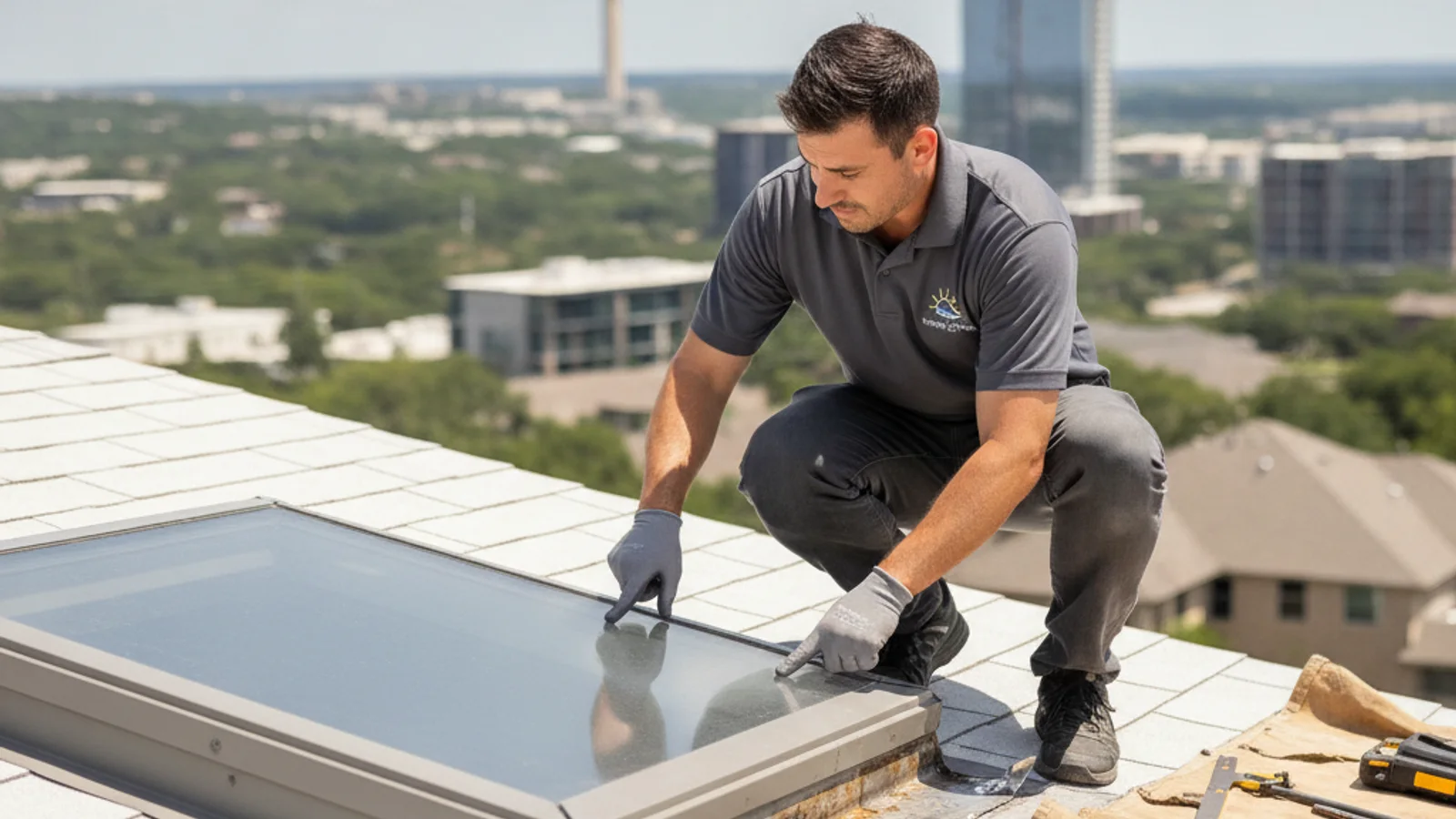
Flashing, the metal or membrane material sealing the joint between the skylight and the roof, is the single most common failure point on a leaking skylight, more often than the glass or the seal itself. When a skylight starts leaking, flashing is the first thing worth checking, not the last.
What flashing is and why it fails first
Flashing sits at the seam between the skylight frame and the surrounding roofing material, and its entire job is keeping water out of that seam no matter how the roof and the skylight expand, contract, or shift relative to each other over time. That constant movement, driven by heat cycling through the seasons and by the roof itself settling over years, puts more ongoing stress on the flashing than on almost any other part of the skylight assembly. The glass and the seal degrade slowly and predictably. Flashing takes a more direct beating from thermal expansion and weather cycling, which is why it tends to be the first thing to give out.
Flashing repair vs. full replacement
A flashing repair means reseating or replacing the flashing kit around the skylight without touching the unit itself. This is usually the cheaper, faster fix when the skylight’s glass and frame are otherwise sound. A skylight repair technician can typically diagnose whether flashing alone is the issue during a single inspection visit, since the pattern of staining and the location of the leak usually point clearly to flashing rather than the glazing or the seal.
Signs the problem is flashing specifically
Staining that follows the perimeter of the skylight, rather than concentrating in the center of the glass, points toward flashing rather than a seal or glass failure. A leak that starts or noticeably worsens shortly after a re-roof done by a different crew is another strong signal, since flashing that wasn’t correctly reintegrated during a re-roof is a common and preventable cause of a leak that shows up soon after.
Why flashing method differs by roof type
The correct flashing approach depends entirely on the roofing material it’s sealing against. A composition shingle roof uses step flashing woven into the surrounding shingle courses. A standing-seam metal roof requires a flashing kit built specifically for that seam profile, and using a shingle-style flashing approach on a metal roof is a mismatch that tends to fail. Getting this detail right matters more on a metal roof specifically, since the wrong flashing method there often shows up as a leak within the first year or two rather than gradually over a decade.
When flashing failure signals a bigger issue
Repeated flashing failures on the same skylight, especially if a previous repair didn’t hold, often means the original install method didn’t match the roof correctly in the first place, not that flashing simply wears out at random. If a skylight has needed flashing attention more than once in a short span, it’s worth having someone confirm the original flashing approach was actually right for that roof type before doing another patch repair on top of a mismatched install.
What a repair visit actually involves
A technician removes the failed flashing sections, checks the roof deck underneath for any water damage that needs addressing first, and installs new flashing matched to the roof material and the skylight’s manufacturer specifications. On a straightforward composition shingle roof, this is often a same-day fix. A skylight installation crew that also handles repair work is generally the better choice for this kind of job over a general roofer, since flashing method knowledge specific to skylights isn’t something every roofing crew handles regularly.
How long does flashing usually last before it needs attention?
Well-installed flashing on the correct roof type can last well over a decade before showing signs of wear. Poorly matched flashing for the roof material can fail much sooner, sometimes within the first couple of years.
Can flashing be repaired without removing the skylight?
In most cases, yes. Flashing repair typically involves working around the existing skylight unit rather than removing it, which is part of why it’s usually cheaper and faster than a full replacement.
Does a flashing repair require a permit the way a full install does?
Generally not, since a straightforward flashing repair doesn’t involve a new roof penetration or structural framing change the way an original skylight install does. It’s worth confirming with your specific project scope if the repair involves any additional work beyond the flashing itself.
Getting a leaking skylight checked
If a skylight has started leaking or has needed repeat attention, flashing is the first place worth checking before assuming the whole unit needs replacing. Bright Sky ATX connects Austin homeowners with experienced, insured local crews for skylight flashing repair and full installation alike. Call (737) 477-8898 for a free estimate.