Hail damage to skylights and homeowners insurance in Austin
Hail damage to a skylight is usually part of the same claim as your roof. Here's how to document it, what adjusters look for, and Austin's storm record.
Diagnostic walkthroughs for the most common skylight and solar tube problems we see across Central Texas. What to check before calling, what each sign usually means, and when a crew needs to look at it in person.
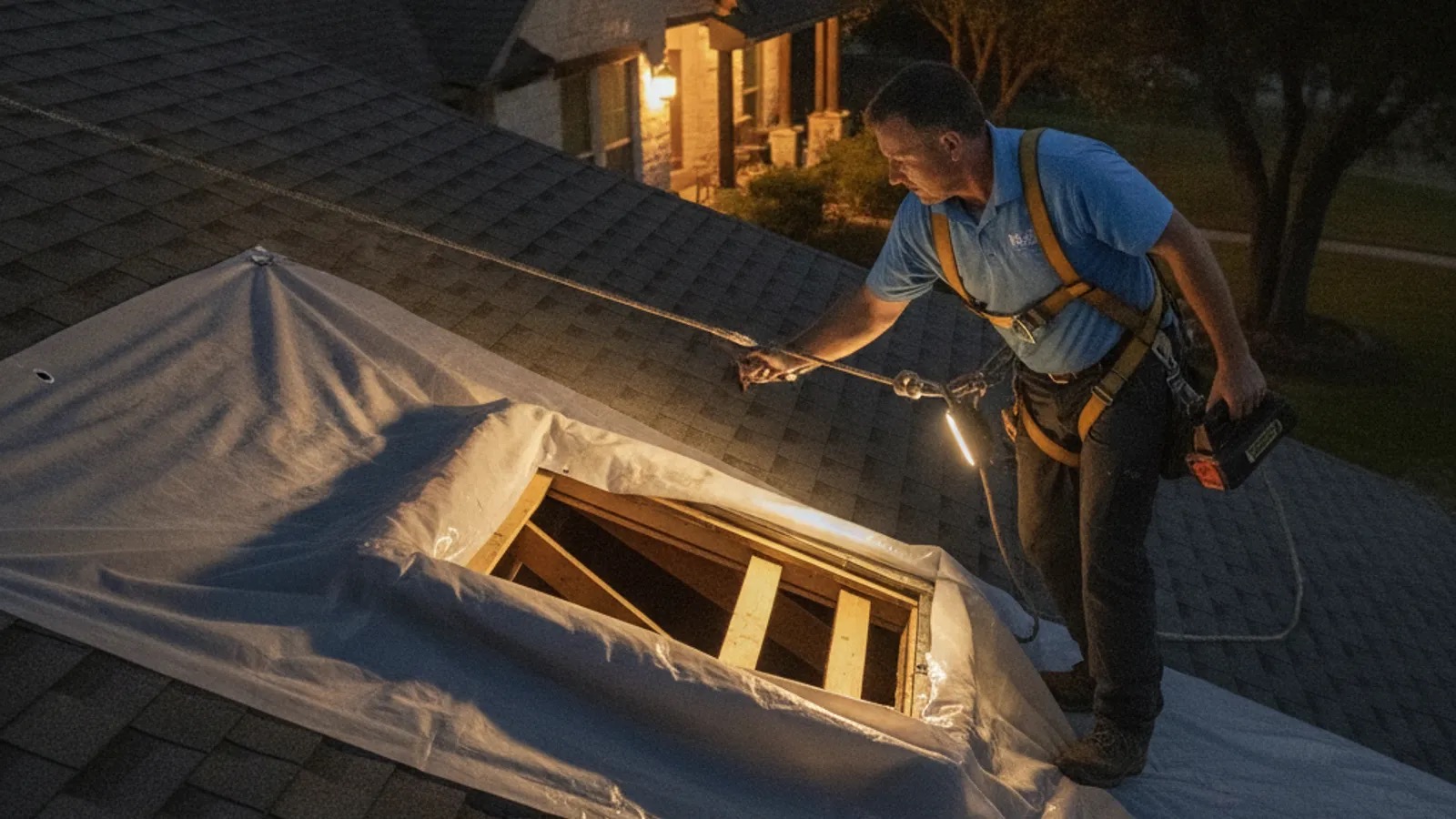
Hail damage to a skylight is usually part of the same claim as your roof. Here's how to document it, what adjusters look for, and Austin's storm record.
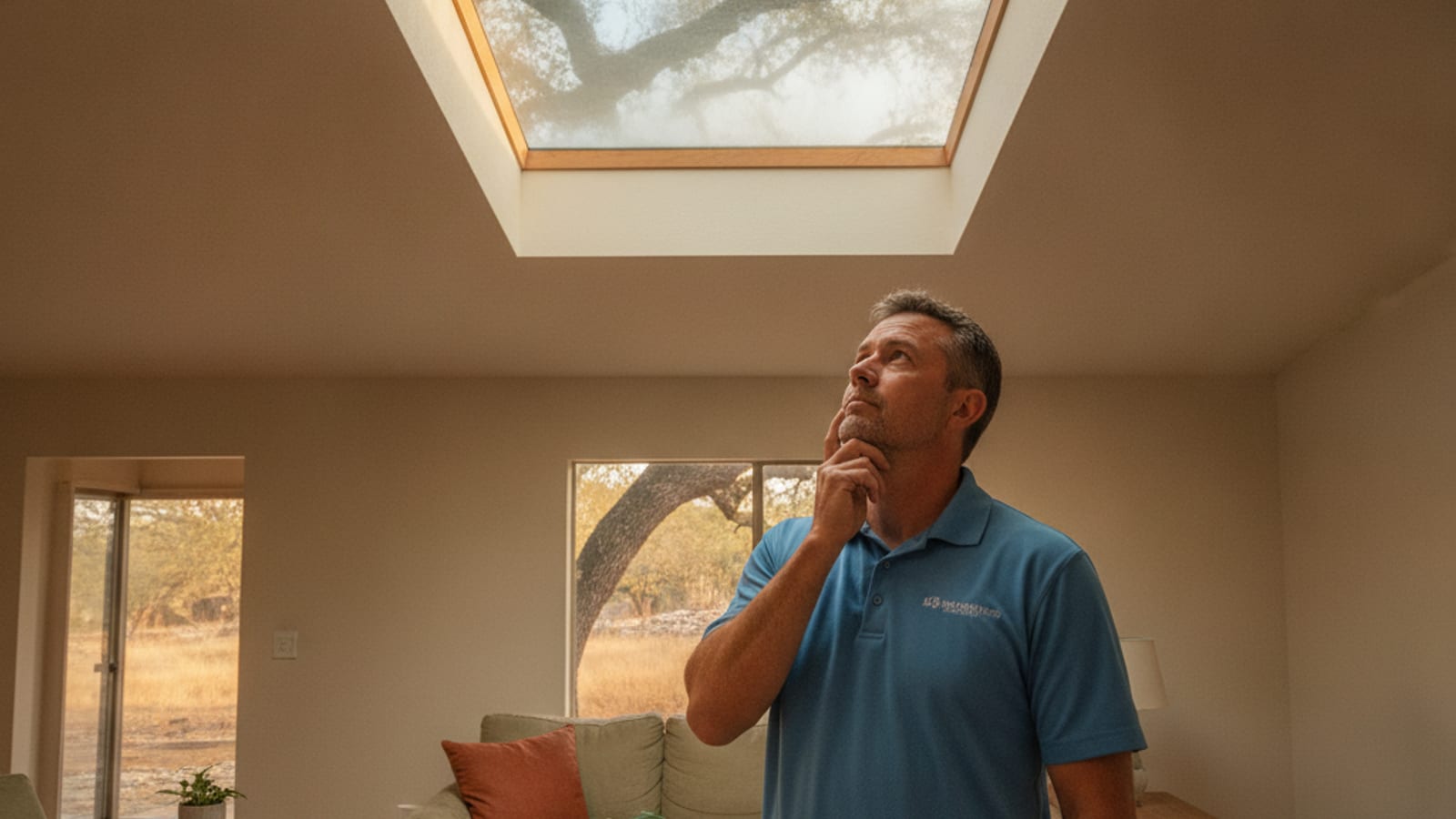
Moisture around your skylight with no recent rain is usually condensation, not a leak. Here's the five-minute check and when to actually worry.
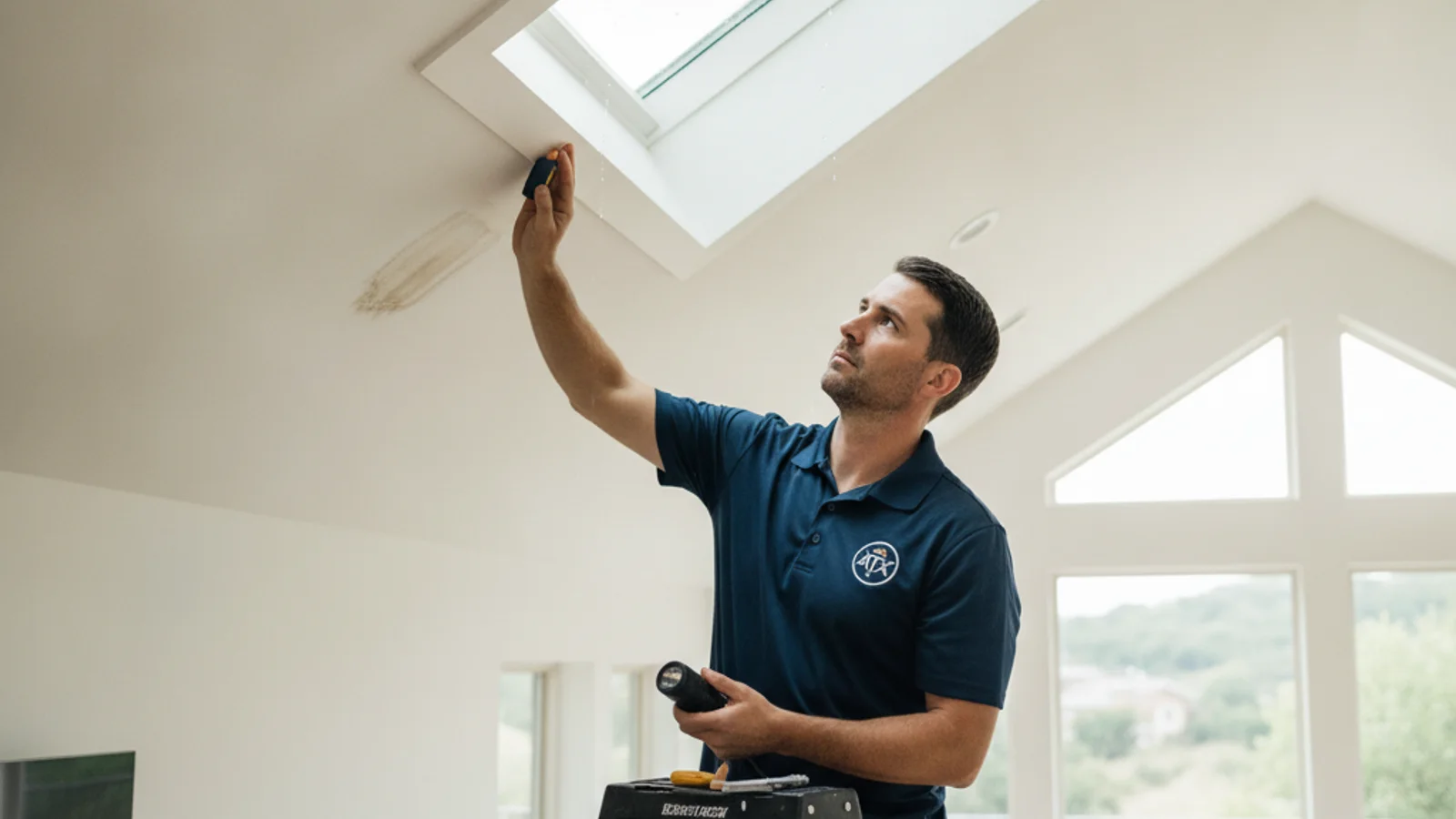
Water showing up near your skylight after rain doesn't always mean the skylight is the problem. Here's the drip-location test Austin homeowners can run first.

If the frame and flashing are sound and only the glazing has failed, glass-only replacement is usually the cheaper, faster fix. Here's how to tell which one you need.
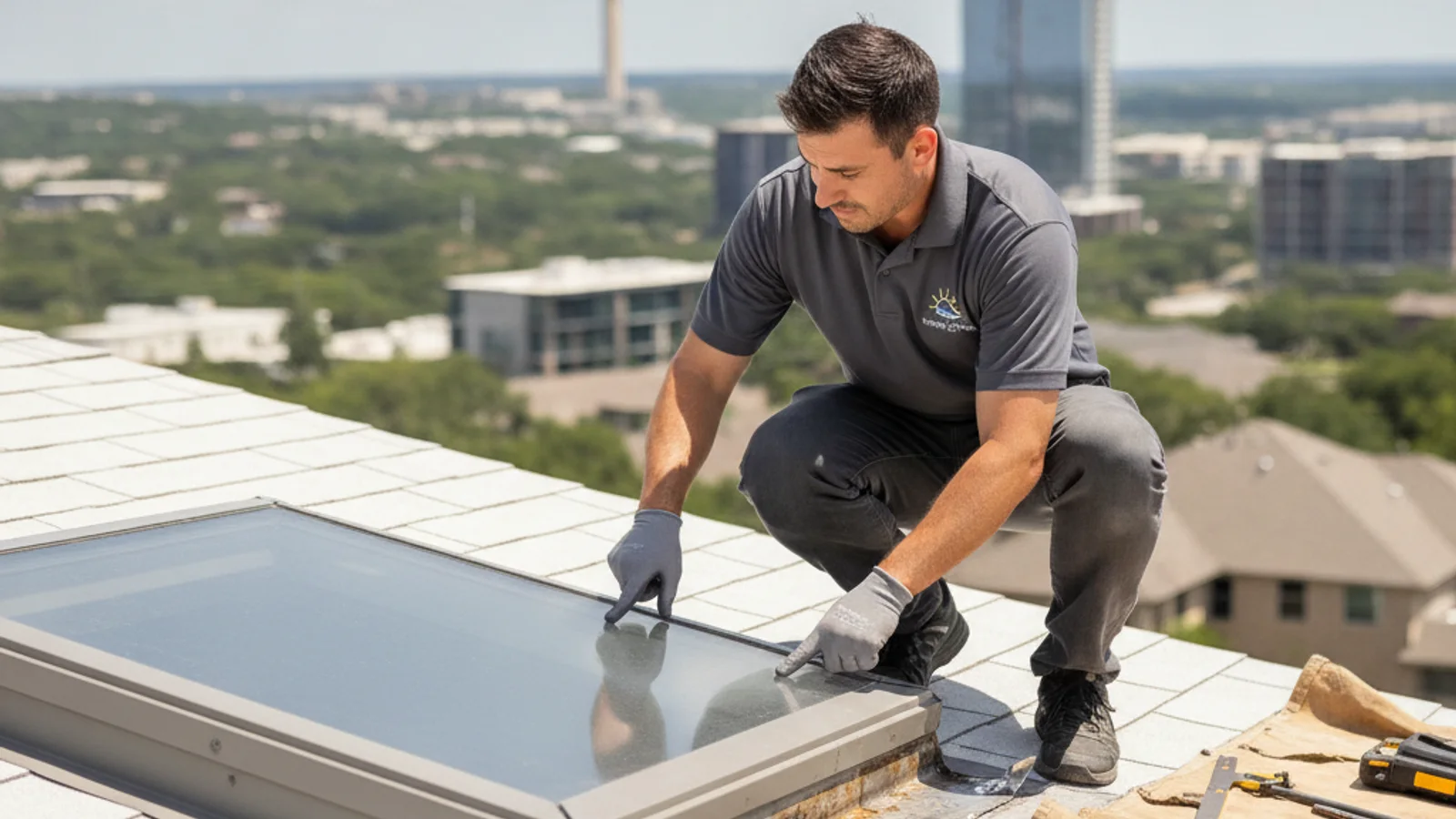
Flashing, not the glass or the seal, is the single most common source of a leaking skylight. Here's what flashing does, why it fails, and how a repair works.
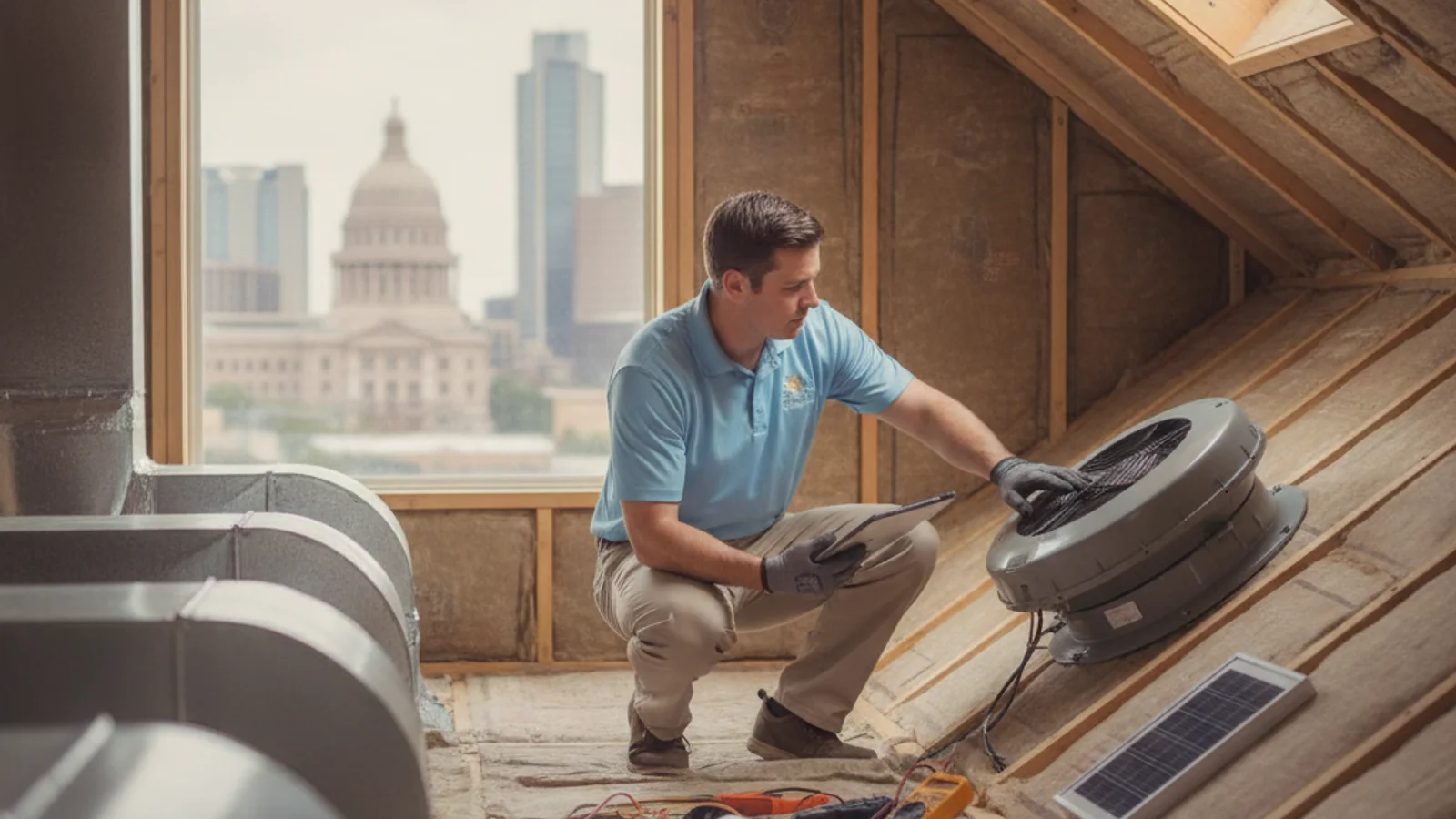
A solar attic fan that stopped spinning is usually a motor or panel problem. Here's how to tell what's wrong and whether repair or replacement makes sense.
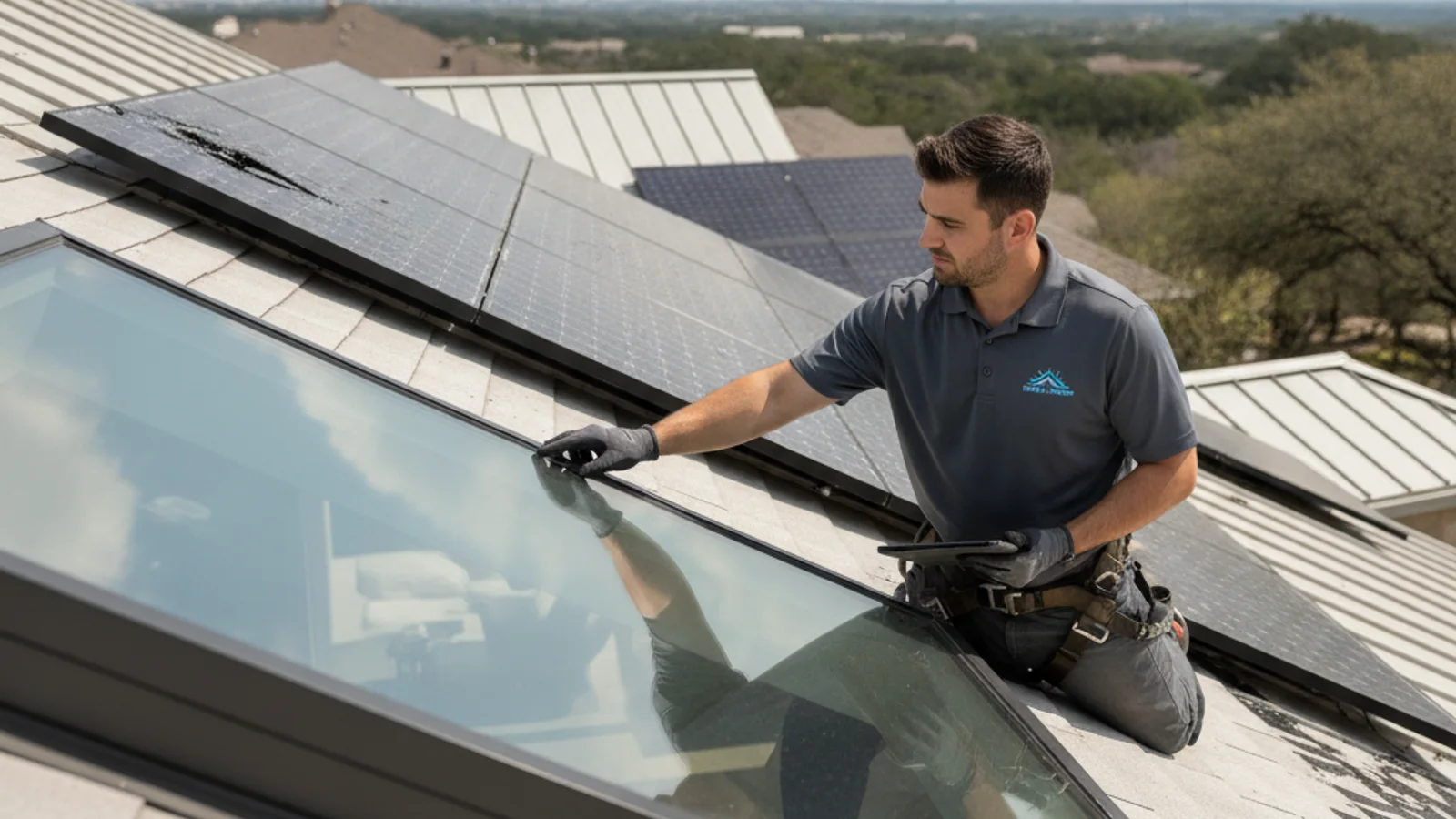
Hail cracks skylight glass and dents shingles in different ways. Here's what to inspect after an Austin storm and why skylight damage gets missed most.
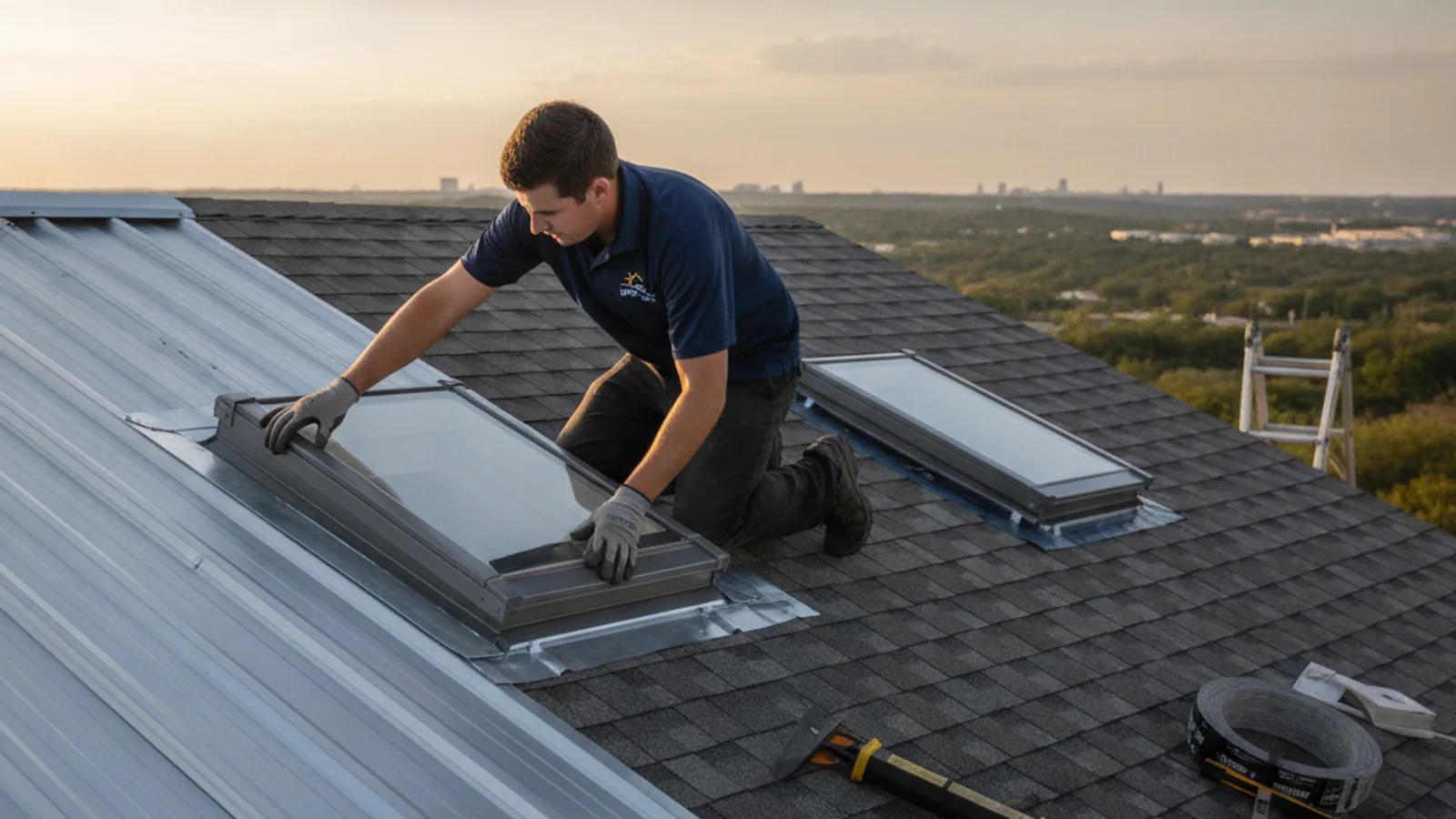
Step flashing on shingles and seam-integrated flashing on standing-seam metal are not interchangeable methods. Here's how each works and why it matters in Austin.
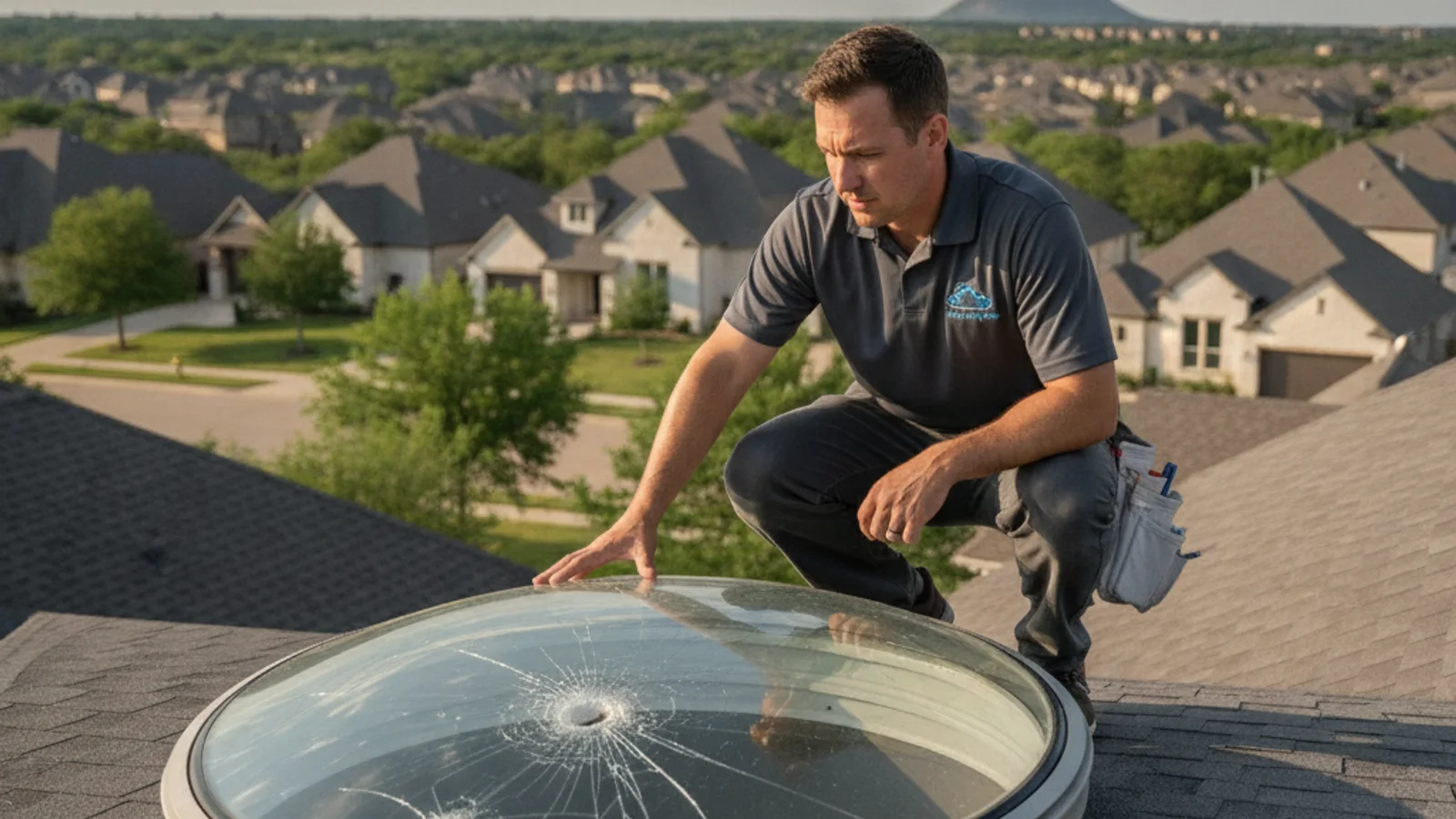
Round Rock sits directly on the I-35 hail-alley corridor. Here's what that storm history means for how skylights and solar tubes get installed there.
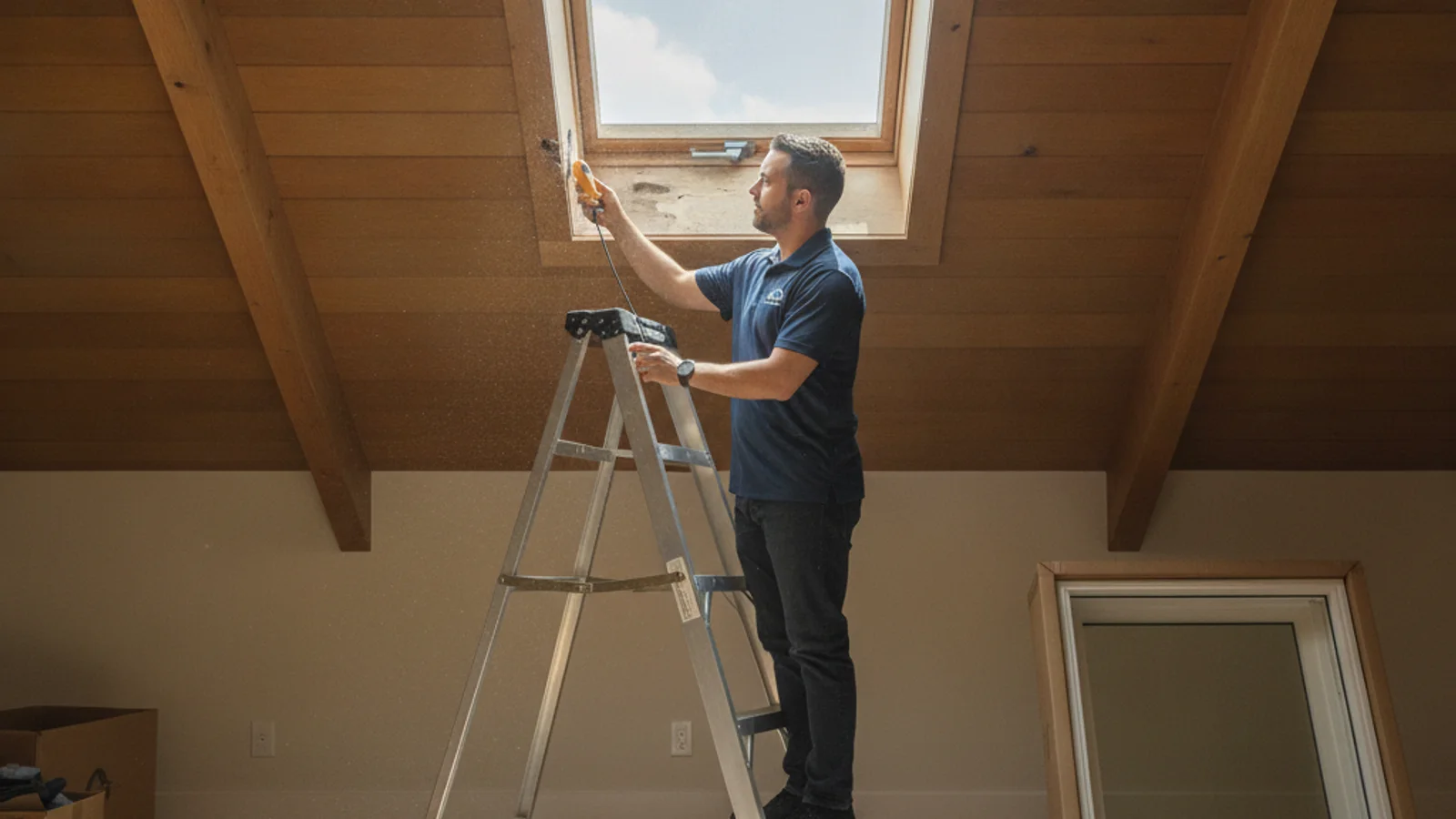
Repair makes sense when the problem is isolated and the frame is sound. Replacement makes sense when repeated repairs are just delaying the same outcome.
Call us. You reach us directly, not a call center.