A fogged or cracked pane doesn’t always settle the larger replacement question. The key is finding whether the problem stops at the glass or reaches the frame, flashing, and roof opening.
When the glass fails and the frame does not
Glass-only replacement may make sense when an inspection isolates the problem to the pane or glazing assembly. That conclusion shouldn’t come from an indoor glance alone. The contractor should examine the glass, frame, opening, and surrounding roof area.
Start by recording what you can see. Note whether cloudiness appears on a room-facing surface or seems trapped inside the glazing. Note any visible crack and the angle from which you saw it. Also note stains, damp trim, peeling paint, or changes after rain.
Those observations help, but they don’t prove the source. A visible glass problem can exist alongside a separate issue at the frame or flashing. Water near a skylight also doesn’t automatically mean the glass caused it. The inspection should separate those conditions before the quote assigns a repair.
Ask the contractor to state the diagnosis in writing. The answer should identify the failed component and explain why the remaining parts can stay. If the frame is being reused, the quote should name it as reused rather than leaving that decision implied.
Compatibility matters too. The replacement pane or glazing assembly must match the existing unit and opening. Bright Sky ATX couldn’t confirm a universal glass specification for Austin skylights from the approved sources. Ask the contractor to document the proposed product, its manufacturer, and its fit for the existing unit.
Our skylight glass replacement service connects Austin-area homeowners with experienced, insured independent pros. The homeowner contracts with and pays the selected professional directly.
Fog, cracks, and hail marks on the pane
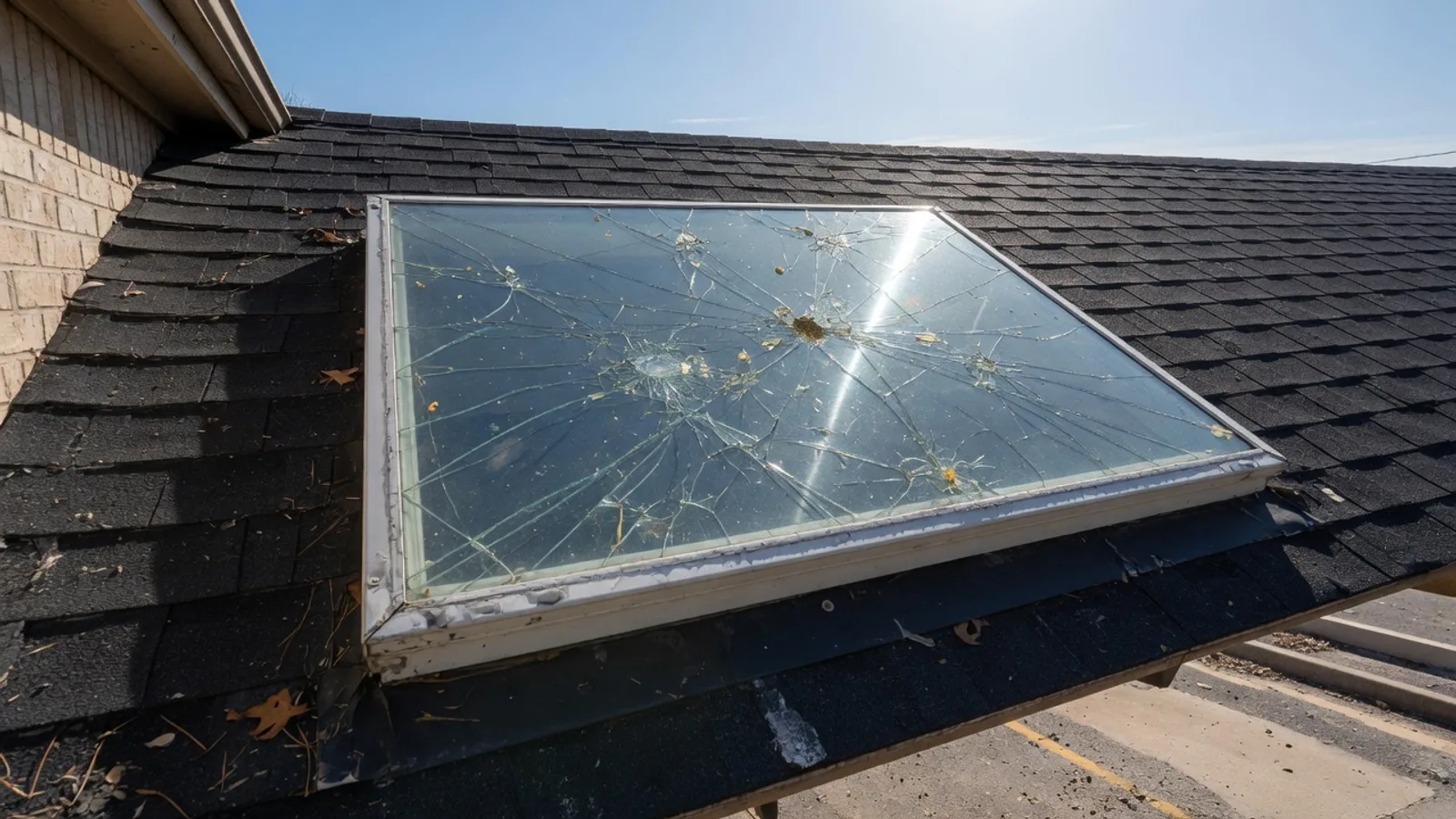
Fog, cracks, and impact marks call for different questions. None should be diagnosed from a single photo when the condition of the roof-side components remains unknown.
With foggy skylight glass, first locate the moisture. Wipe the accessible room-facing surface and see whether the cloudy area remains. If the haze seems enclosed, ask the inspector to identify exactly where it sits and which component is affected.
Our guide to foggy skylight glass between panes offers a closer look at that symptom. The practical goal is still simple: determine whether the quote addresses the glass alone or a wider skylight problem.
For a crack, document its length, position, and any visible change. The contractor should inspect the crack and the surrounding unit before recommending a scope.
Hail marks need wider context. Photograph the skylight, nearby roof surfaces visible from the ground, and the date of the storm. Marks on the pane don’t establish the condition of the frame or roof. Likewise, roof damage doesn’t prove the glass must be replaced.
The September 24, 2023 Central Texas hailstorm caused an estimated $600 million in combined losses across Travis and Williamson counties. Round Rock saw hail reported at about four inches. That verified event shows why Austin-area assessments shouldn’t stop at the most obvious mark.
Read our comparison of hail damage on a skylight versus the roof before reviewing a storm-related quote. It explains why each part deserves its own written finding.
Why Austin heat and storms matter
Austin’s climate belongs in the decision, but it shouldn’t become a shortcut diagnosis. Heat, sunlight, hail, and rain are reasons to inspect the full opening carefully. They don’t prove which component failed.
The City of Austin’s 2024 residential energy-code tables place Austin in Climate Zone 2. Those tables publish maximum skylight values of 0.60 for U-factor and 0.28 for solar heat gain coefficient. These figures apply within the cited Austin code context. They aren’t a universal product recommendation for every existing home.
If a contractor proposes new glazing, ask for the product documentation. The written quote should identify the values being offered and explain which jurisdictional requirements apply to the property. You can also compare product information with the federal ENERGY STAR criteria for windows, doors, and skylights.
Location changes the review. A home inside Austin doesn’t share a permit desk with every address in the metro. Cedar Park Building Permits and Inspections reviews building work inside Cedar Park. Homeowners there should confirm whether the proposed skylight scope needs a permit before work begins.
Leander publishes a permit guidance list, but the city says that list isn’t comprehensive. Skylights aren’t named on it. A Leander homeowner should ask a city inspector before treating work at a roof opening as permit-free.
Kyle Building Inspection is also a separate authority inside Kyle city limits. Its published list isn’t comprehensive and doesn’t name skylights. Confirm the planned scope with that department before work starts.
Mueller adds another layer. Modifications to existing improvements receive advance review under the Mueller Design Book process. Confirm the current review packet before authorizing a roof modification.
Glass-only work vs a full unit swap
The decision should follow the documented condition of each component. Glass-only work keeps the scope focused on the failed glazing. A full-unit proposal includes more of the skylight assembly and may involve the roof connection.
Ask the contractor to separate four findings: glass, frame, flashing, and surrounding roof area. Each should be marked for replacement, reuse, or further review. That structure makes competing quotes easier to compare.
A glass-only proposal needs a clear reason for retaining the existing frame. It should also identify the replacement product and any required work around the glazing. If a matching component can’t be confirmed, the contractor should say so rather than substitute an unexplained item.
A full-unit proposal also needs a reason. “Old” or “damaged” is too vague by itself. Ask which visible condition supports replacement and whether that condition affects the frame, operating parts, flashing, or fit.
Bright Sky ATX couldn’t confirm a universal price difference between these scopes from the approved sources. No verified Austin market figure for this exact decision was available. Get an itemized quote after an on-site inspection, then compare matching scopes.
Price alone can hide a major scope difference. One proposal may cover only the glazing. Another may include the complete unit and roof-side work. Compare the named components, exclusions, and product details before comparing totals.
For a broader side-by-side framework, read skylight glass replacement versus full replacement. If the inspection supports replacing the entire assembly, the skylight replacement service explains how Bright Sky ATX can connect you with a local professional.
What belongs on an itemized quote
A useful quote lets you see what the contractor found and what the proposed price covers. It shouldn’t make you reconstruct the scope from a single total.
The document should identify the exact skylight and its location. In a home with several units, labels such as “hallway skylight” or “rear bedroom skylight” prevent confusion. Photos can make that identification clearer.
The diagnosis should name the affected component. Look for separate notes on the glass or glazing assembly, frame, flashing, interior well, and nearby roof area. If any part wasn’t inspected, the quote should say that too.
For glass-only work, request these details:
- The proposed glass or glazing assembly
- The manufacturer and product identifier, when available
- Which existing components will remain
- Any interior or roof-side work included
- Work specifically excluded from the price
- Permit responsibility, if the authority requires one
- Payment terms and change-order terms
- Written documentation for any manufacturer or contractor coverage offered
For a full-unit proposal, request the same details for the complete skylight. The quote should also distinguish the new unit from related roof, flashing, trim, paint, or ceiling work. Don’t assume an adjacent task is included unless it appears in writing.
Ask how hidden conditions will be handled. The quote should explain what happens if opening the area reveals a different problem. That doesn’t require an invented allowance or guessed price. It requires a clear process for documenting and approving a changed scope.
Bright Sky ATX doesn’t set contractor prices or provide warranties. The homeowner reviews the proposal, selects the professional, and contracts with that professional directly. Comparing itemized documents helps keep that decision tied to the actual diagnosis.
When to call us
Call when fog, cracks, or hail marks need an on-site assessment by an experienced, insured skylight and daylighting professional. Call us at (737) 477-8898 and we will match you with an experienced, insured independent local pro.