How long a skylight lasts in Austin depends on the unit that is on your roof, how it was flashed, and what the climate has done to it. A national year range copied from a brochure is not a measurement of a Hyde Park bungalow or a Round Rock two-story. A specific average service life could not be confirmed for this page. Read the label. Then look at the glass, the curb, and the flashing.
Repair or replace already refuses a year rule. This page is the lifespan question itself: what actually ages, and what Austin does to it.
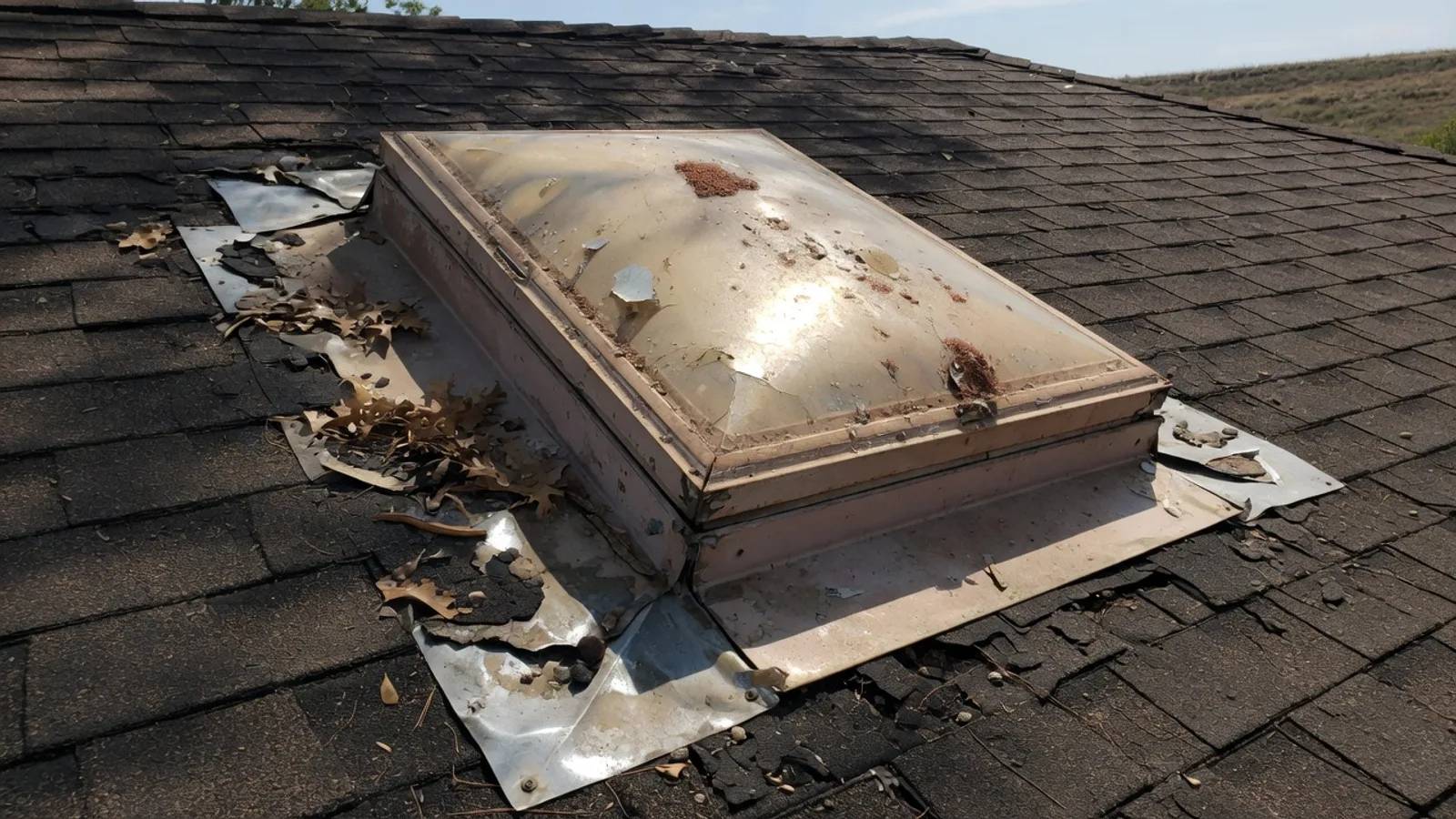
What ages on the unit
Glass and seals. Insulated units lose the edge seal. Fog appears between panes. That is a glazing end-of-life, not always a curb end-of-life. See foggy glass between the panes.
The frame and curb. Wood that stays wet from a slow leak goes soft. Clad frames chalk in UV. Fasteners rust. A pane sitting in a rotten curb is not a survivor with a few years left. It is a unit that cannot take new glass.
Flashing. Step flashing on shingles, pans on metal, and reset tile are wear items. A ten-year-old unit with failed flashing can still be a good frame. A twenty-year-old unit with a perfect pane and a rotten pan is still a leak. Those year examples are illustrations of the split, not a published service life.
Acrylic domes on older tubes and some older skylights yellow and go brittle in Austin sun. That is a material path, not a calendar.
Hardware on vented units. Operators, gaskets, and motors fail on their own clocks. Vented versus fixed is the operator page.
What Austin does that a national brochure does not
Hail. The September 24, 2023 Central Texas hailstorm was the costliest Austin-area hailstorm on record. Estimated losses were about $600 million for Travis and Williamson counties combined. Round Rock saw hail up to about 4 inches. One afternoon can end a pane that was otherwise fine. Hail versus the roof and impact-resistant glass are the storm pair.
UV and heat. Attic air in summer is harsh. A south or west unit over a living room in Pflugerville takes more sun than a north unit in the same subdivision. City of Austin Climate Zone 2 maxima for skylights are U-factor 0.60 and SHGC 0.28. Those are energy tables, not a lifespan warranty. Confirm current numbers with the city and the product sheet.
Wind-driven rain. Flashing that might pass a gentle climate fails when rain comes sideways. Wind-driven rain leaks cover that moment.
Roof type. Standing-seam west of Bee Cave, tile in Barton Creek, and tract shingles in Kyle do not age the same flashing. A unit that “should have lasted” on a catalog roof can fail early on the wrong kit.
How to read the unit you have
Find the label. Maker, model, date if it is there, and any rating. Photograph it. If there is no label, the independent installer still measures the opening and looks up what still fits.
Look at the glass for cracks, chips, and between-pane haze. Look at the well for stains. Look at the curb for softness. Look at the flashing course on the roof, not from the driveway.
Ask what parts are still available. Discontinued glass in a sound frame is still a replacement conversation. Available glass in a soft frame is a full unit.
Warranties are maker documents, not something this referral site can quote. Read the paper that came with the unit. Confirm remaining coverage with the maker. Do not treat a blog sentence as a warranty.
The U.S. Department of Energy discusses heating and cooling in homes at energy.gov. ENERGY STAR publishes current product criteria for rated windows, doors, and skylights. Those pages are product and energy context. They are not an Austin year-count.
When to call us
Call when you want an on-roof read of whether an aging skylight in Travis, Williamson, or Hays County still has a future as glass-only work or needs a full replacement. Bright Sky ATX matches you with experienced, insured independent pros. The pro you hire inspects. We do not. See skylight replacement and skylight glass replacement. Call (737) 477-8898.