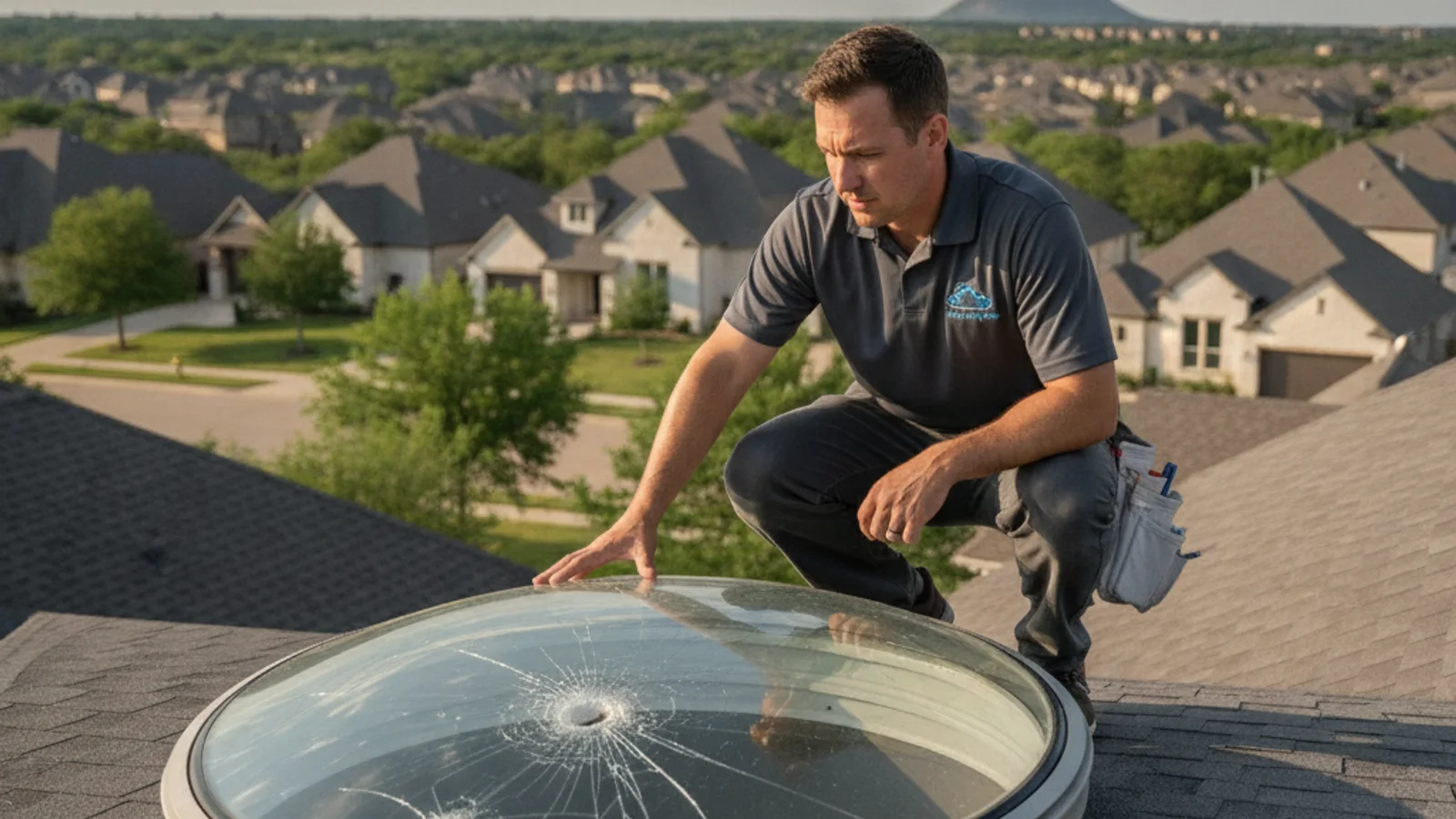
Round Rock sits directly on the I-35 hail-alley corridor, and its storm history has driven much of the metro’s shift toward standing-seam metal roofing as a hail-resistant upgrade. That shift changes how skylights and solar tubes get installed there, since a metal roof calls for a different flashing approach than the shingle roofs most of the rest of the region was built with.
Round Rock’s storm record in the wider hail-alley context
Round Rock is a city of 119,468 people as of the 2020 Census, with a median household income around $93,593. It sits squarely in what roofers call Texas hail alley, and the metro-wide storm dates apply directly here as well: the September 24, 2023 event brought baseball-to-softball-size hail and caused more than $300 million in damage, the costliest hailstorm in Austin metro history. The I-35 corridor as a whole averages 5 to 8 significant hail events a year, with the peak window running March through June.
Why standing-seam metal became the most-requested style here
Standing-seam metal is now the most requested residential roofing style in Round Rock specifically, a direct response to repeated hail exposure. That local preference changes what a skylight or solar tube installer is working with more often than not in this city: instead of the shingle step-flashing method most crews cut their teeth on, a growing share of Round Rock jobs need seam-integrated metal flashing instead. Skylight flashing on metal vs. shingle roofs covers that technical difference in full.
What a hail-damaged skylight looks like on a Round Rock roof
Whether the roof underneath is shingle or the now-common metal, hail damages a skylight’s glazing differently than it damages the surrounding roofing material. Hail damage skylight vs. roof walks through what that damage pattern actually looks like and why it’s easy to miss from the ground.
The re-roof-plus-skylight moment
Round Rock homeowners going through a hail-claim re-roof are in the exact position described metro-wide when a roof is already open for a different reason: it’s the cheapest, least disruptive moment to add or upgrade a skylight, since the labor to access the roof deck is already being paid for as part of the re-roof itself. This applies to Round Rock with extra weight given how often hail claims drive re-roofs here specifically.
The insurance discount angle, briefly
A hail-resistant roof upgrade, including impact-rated skylight glazing where applicable, sometimes affects a homeowner’s insurance premium or deductible structure. The full claims-process explanation, including how a skylight typically factors into a hail claim, lives in skylight hail damage insurance rather than repeated here.
Is Round Rock worse for hail than the rest of Austin?
Round Rock sits within the same I-35 hail-alley corridor as the rest of the metro, and its storm record reflects that shared exposure rather than being a uniquely worse pocket within it.
Does a metal roof in Round Rock change skylight installation cost?
Generally yes. Metal roofs require a specialized seam-integrated flashing kit and more specialized installation experience than shingle roofs, which typically adds to the labor cost of a skylight or solar tube project.
Should a Round Rock homeowner replace skylights during a hail-claim re-roof?
It’s worth evaluating during that same project, since the roof is already open and accessible. Whether replacement makes sense for a specific skylight depends on its current condition and any hail damage found during inspection.
Getting a Round Rock roof assessed
Bright Sky ATX connects Round Rock homeowners with experienced, insured local crews for skylight installation and skylight repair. Call (737) 477-8898 for a free estimate.