A skylight that stays dry in light rain can still drip during a hard Austin thunderstorm. When a skylight leaks during heavy rain, wind direction and the first wet spot help separate flashing, glazing, condensation, and surrounding-roof problems.
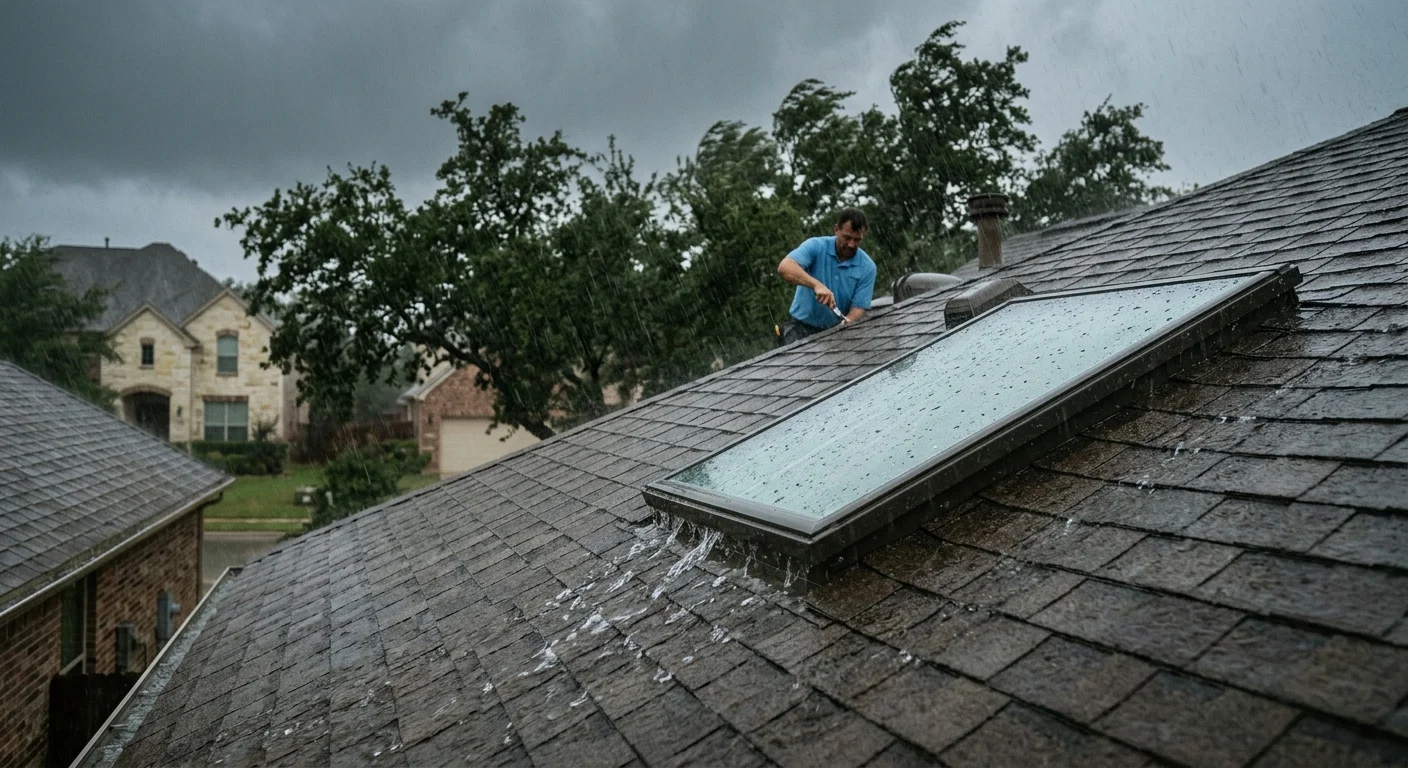
How wind-driven rain finds weak flashing
Flashing connects the skylight assembly to the surrounding roof. Its job is to guide water around the opening and back onto the roof surface. During wind-driven rain, water may approach that assembly from a direction that light rain never tests. A small opening at a corner, seam, fastener, or flashing edge may then become an entry point.
That pattern matters when a skylight leaks only during certain storms. The skylight itself may remain dry during calm rain. A leak may appear when wind pushes water toward one roof plane or against one side of the frame. The visible drip still doesn’t prove which part failed. Water can enter nearby and travel before reaching the ceiling.
Write down these details while staying inside:
- Which side of the skylight becomes wet first
- Whether the leak starts immediately or later
- Whether water appears at a frame corner or ceiling seam
- Whether calm rain causes any moisture
- Which direction the storm appears to be moving
A repair pro can compare that pattern with the exterior flashing layout. The inspection may include the head flashing above the unit, the side pieces, the lower sill area, and nearby roofing. The goal is to find the actual entry path, not simply cover the visible interior gap.
Our guide to skylight flashing repair explains that part of the system in more detail. If water is already reaching the room, a skylight repair and leak repair pro can examine the skylight and surrounding roof together.
Why heat and hail can expose older seals
A storm leak doesn’t always begin with that storm. The weather may reveal a joint or seal that was already becoming vulnerable. Heat-related movement can open and close small gaps between different parts of a skylight assembly. Older sealants and gaskets may also become less flexible over time.
Hail adds another diagnostic question. An impact could affect glazing, exterior trim, flashing, or roofing near the skylight. However, a mark seen from inside doesn’t establish what caused it. The timing of the leak, the location of each mark, and a close exterior inspection all matter.
Look at the glazing from the room without removing trim. A crack, chip, or wet glazing edge belongs in your photo record. Moisture trapped between panes can point toward a glazing seal concern. Water running across the room-facing surface may instead be condensation. Neither observation proves where stormwater entered.
The timing offers another clue. Moisture that forms during dry weather deserves a condensation check. Water that appears only while rain strikes one side of the roof calls for an exterior water-path inspection. Both conditions can happen near the same skylight, so don’t treat one clue as a complete diagnosis.
Avoid adding fresh caulk from inside before the inspection. That can hide the first visible entry point without addressing water outside the assembly. It may also make the leak harder to trace during the next storm.
What to check safely from inside
Start with the room below the skylight. Stay off the roof during the storm. You can collect useful evidence without opening the ceiling, removing the frame, or touching wet electrical components.
Use your phone to record the first visible moisture. Then check:
- The room-facing glass and its corners
- The joint between the frame and finished shaft
- The ceiling seam above and below the opening
- Nearby walls, trim, and light fixtures
- The floor or furnishings directly below the drip
- Any older stain extending beyond the fresh wet area
Mark the edge of a ceiling stain with removable painter’s tape if that won’t damage the finish. Add the time beside the mark. A later photo may show whether the wet area spread toward the skylight, away from it, or along a ceiling seam.
If your attic has a normal, dry access route, a view from the entrance may help. Don’t cross framing or insulation to chase the leak. From a stable access point, photograph any visible damp wood, insulation, or water trail above the skylight shaft. Leave closer attic and roof inspection to the pro.
Condensation usually needs a different line of questions than rain entry. Note whether moisture sits on the room side of the glass. Also note whether it appears when no rain is falling. For stormwater, record where the first drop emerges during active rain. These observations won’t replace an inspection, but they help the pro begin with a clearer map.
When the roof, not the skylight, is leaking
The nearest visible opening isn’t always the entry point. Water may enter the roof above or beside a skylight, then follow framing or roof decking. It can finally emerge along the skylight shaft because that’s where the ceiling assembly changes.
Several interior patterns can shift attention toward the surrounding roof:
- The stain begins above the skylight instead of at its frame
- Moisture follows a rafter or ceiling seam
- More than one ceiling area becomes wet
- The skylight glass and interior frame remain dry
- The stain spreads well beyond the finished shaft
These clues don’t rule out flashing. They tell the repair pro to inspect a wider area. Nearby roofing, roof transitions, penetrations, and the complete flashing perimeter may all need attention. A narrow inspection focused only on the glass could miss the real path.
Water movement can also make the leak look lower than its source. That’s why the first wet location matters more than the largest stain. A broad stain may reflect water spreading through drywall or insulation after it entered elsewhere.
The Austin skylight leak diagnostic guide covers the wider process for separating skylight, flashing, condensation, and roofing symptoms. For a leak tied to wind-driven rain, add storm direction and timing to that checklist. Those details can help explain why the problem appears during one Austin storm but not another.
What photos help a repair pro diagnose
Useful photos show sequence and context. A single close-up of a brown stain may not reveal where the skylight sits, which corner became wet first, or how far the moisture traveled.
Take these photos from dry, stable indoor positions:
- A wide view showing the skylight and surrounding ceiling
- A close view of the first fresh drip or damp edge
- Each corner of the interior frame
- The room-facing surface of the glazing
- Any crack, chip, fogging, or staining you can see
- The full outline of the finished skylight shaft
- A later photo showing whether the stain expanded
Keep the original files when possible. Their timestamps can help place the photos in order. Take another wide photo from the same position after the rain ends. That makes changes easier to compare.
Add a short written log. Note when the rain began, when moisture first appeared, and which side became wet. Record whether the skylight opens or remains fixed. Include any recent roofing, painting, ceiling, or skylight work you know about, without guessing at dates or causes.
Exterior photos can help when they’re taken safely from the ground on a dry day. Include the whole roof plane before zooming toward the skylight. Don’t climb onto the roof for a better angle. A distant image may still show the skylight’s position relative to roof edges, ridges, and nearby penetrations.
Photos guide the inspection, but they don’t prove the source alone. The pro may still need to examine the glazing, frame, flashing, and surrounding roofing before recommending a repair.
When to call us
Call when the leak repeats during heavy rain, the stain grows, or the source isn’t visible from a safe indoor position. Bright Sky ATX serves the Austin metro across Travis, Williamson, and Hays counties as a referral service. Call us at (737) 477-8898 and we’ll match you with an experienced, insured independent local skylight pro.