You’re pricing a whole house fan for an Austin house, and the first number you hear is almost never the last. The fan itself is one line on the bid. Attic venting, electrical work, and the ceiling cut usually decide the rest.
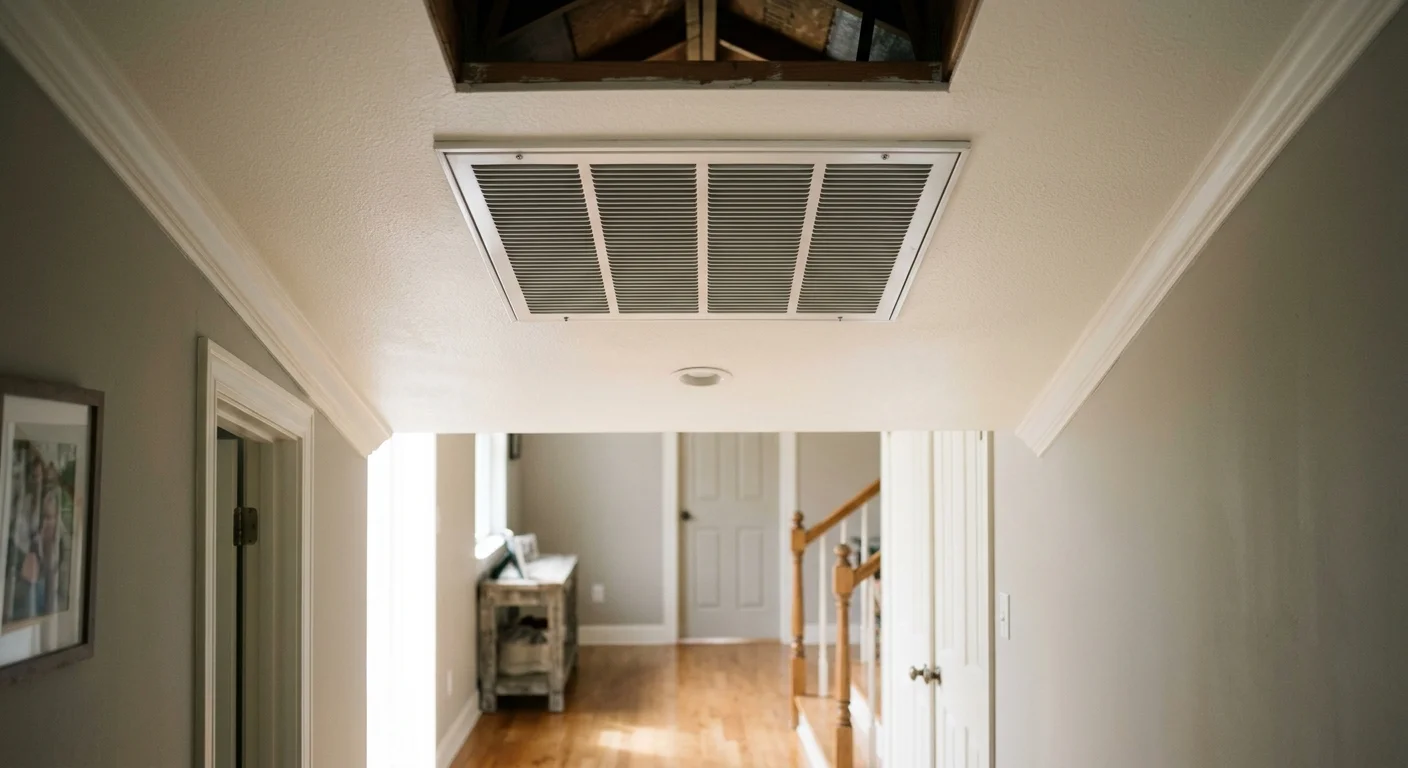
A whole house fan cost in Austin is a job price, not a box price. Bright Sky ATX does not set that number. Independent, insured pros in Travis, Williamson, and Hays counties quote the work, and you contract with them directly. A verified local dollar range could not be confirmed from the sources this site is allowed to cite. Treat any round figure you see online as a planning hint only. Get an itemized bid after someone has been in the attic.
What actually drives the price of the job
The quote is a stack of parts, labor, and site conditions. The unit is the easy line to compare. The rest of the stack is where two houses on the same street can land far apart.
Equipment is the fan, housing, damper, and ceiling grille. Controls sit on that line too: a simple wall switch is one path, a timer or insulated doors is another. None of those choices has a published Austin price on this site. Ask the contractor to name the model and the control package in writing.
Labor covers the ceiling cut, framing, setting the unit, and finishing the room side. A hallway in a single-story Allandale ranch is a different finish job than a two-story plan in Cedar Park with a tight upstairs landing. Paint, texture, and trim are often extra. If they are not on the bid, ask.
Electrical work is a real cost driver in Central Texas housing stock. Some houses have a spare circuit and a clean path to the switch. Others have a full panel, a long homerun, or wiring that needs a closer look before a motor is added. Do not guess that part from the street. The pro has to see the panel and the run.
Attic exhaust is the other big swing. A whole house fan pulls air from the living space and pushes it into the attic, then out of the house. If the attic already has a clear exhaust path, that line stays smaller. If soffits are blocked, vents are undersized, or the attic was sealed, the bid has to add exhaust work or the fan is a poor fit.
Roof type and access change labor even when the fan is the same. A steep metal roof west of the city is slower to work than a moderate-pitch composition roof in East Austin. Blown-in insulation that has to be raked back, bagged, and put back is time. Low clearance over a 1940s bungalow is time.
Bright Sky ATX matches you with experienced, insured local pros for whole house fan installation. The brand does not own trucks, hold a trade license, or publish a price list. The number you plan around is the contractor’s itemized bid, after the attic, the venting, and the electrical have been checked.
How home size, wiring, and attic venting change a quote
Home size matters, but it is not a simple multiplier. A larger footprint needs more airflow, and that can mean a larger unit or a different layout. Capacity should come from a measurement of the house, not a rule of thumb copied from another climate. For the sizing logic, use the Austin-specific guide on how to size a whole house fan. This page stays on cost. Do not let a CFM number from a national chart set your budget. That figure could not be verified here, and the installer still has to match the fan to the attic’s ability to dump air.
Wiring is where older Travis County houses often separate from newer Williamson County production homes. Hyde Park, Clarksville, Travis Heights, and similar central stock can have panels that are already busy, long runs through finished ceilings, and limited attic walking space. A 2000s or 2010s house in Round Rock or Pflugerville is more likely to have a clearer electrical path, though that is still a site check, not a promise. If the panel is full, the quote can pick up a circuit, a subpanel discussion, or a redesign of the switch location. None of those add-ons has a verified dollar figure on this ledger. They belong on the bid as named lines, or they get missed.
Ask who handles the electrical and whether the city or county wants a permit for that part of the work. Rules are not the same across Austin, Round Rock, San Marcos, and the unincorporated edges of Hays County. A requirement you heard for one address does not travel with the fan. Confirm it with the jurisdiction that has the house, and have the contractor write the answer on the quote.
Attic venting is the quiet deal-breaker. Traditional vented attics over many central and east-side houses can take a whole house fan if ridge, gable, or soffit paths are open. Hill Country houses in Bee Cave, Dripping Springs, and similar west-side stock are more likely to have spray foam or a sealed attic. A sealed attic does not give the fan a place to push air. The bid then has to add dedicated exhaust, or the pro should tell you the product is the wrong tool.
Insulation condition shows up on the same visit. If the contractor has to build a dam around the unit, pull insulation off the deck, or add baffles so soffits can breathe, that is labor. If the damper does not seal well in summer, you pay for it later on the AC bill. Austin still needs air conditioning on the hot stretch of the year. A whole house fan is a shoulder-season and cool-night tool, not a replacement for a sized cooling system. The U.S. Department of Energy’s heating and cooling overview is a useful frame for how fans sit next to mechanical cooling. It does not set an Austin install price.
For older houses with unknown wiring, read the companion note on whole house fans in older Austin homes before you compare bids. The cost question and the wiring question are the same visit.
How this compares with a solar attic fan path
A whole house fan and a solar attic fan are different machines, and they should not share a single budget line. Mixing them is how people underprice one job and overpromise the other.
A whole house fan is a living-space device. It sits in the ceiling, usually over a hall. It pulls indoor air up and out. You open windows on the cool side of an Austin day or night, run the fan, and swap the air in the rooms. That is why the ceiling finish, the damper, and the electrical to a wall control show up on the quote.
A solar attic fan is an attic device. It sits on the roof or in a gable and moves hot attic air. It does not pull a noticeable volume of air out of the bedrooms. The living space stays closed. Electrical work is often smaller, and there is no hallway grille to finish. That is a different labor stack.
Because the jobs diverge, a cheaper attic-fan path does not tell you what whole house fan installation cost will be on the same roof. If you are deciding between the two, get both scoped. Use the solar attic fan installation page for the product path, and use the attic fan installation cost in Austin post for the attic-fan budget conversation. Keep this page for the whole-house-fan bid.
What you can compare without numbers: ceiling disruption, electrical need, attic exhaust, and what you want the fan to do at 9 p.m. in September. If the goal is cooler rooms after a cooler evening, the whole house fan is the matching tool. If the goal is a cooler attic with the house closed, the solar attic fan is the matching tool. Some houses end up with both, on separate quotes, because they solve different heat problems.
Do not use a national savings claim to pick a path. No kWh, percent, or payback figure for Austin whole house fans is on the verified ledger for this site, so none belongs in a planning number. The Texas State Energy Conservation Office publishes statewide efficiency guidance. It is a place to read policy and programs. It is not a substitute for an attic inspection on your lot.
Federal energy-credit dollar amounts are also off the table here. Confirm any tax-credit question at quote time with a tax professional and the contractor’s invoice language. Do not bake a credit into the job price before that check.
What belongs on an itemized bid
A useful bid reads like a parts list plus a site report. A one-line total does not let you compare anything. Ask the contractor to break the job into named lines, even if some lines are allowances pending a second look.
Equipment should name the fan, the housing, the damper, and the grille. If insulated doors or a timer are part of the package, they get their own words. Capacity should be tied to what the pro measured, not to a catalog page alone. If the model can change after the attic visit, the bid should say so.
Ceiling work should name the cut location, framing, any damper box, and the room-side finish. Hallway, closet, and landing are not the same finish. If paint and texture are excluded, that exclusion should be in writing.
Electrical should name the circuit plan, the switch location, and any panel work the pro already knows about. If the panel has not been opened yet, the bid should say the electrical line is pending. That is honest. A firm electrical price with no panel photo is a guess.
Attic venting should name what is already there and what will be added. Soffit clearing, a new exhaust path, or a statement that the existing vents are enough: pick one and write it down. On a sealed or spray-foam attic, the bid should say whether the fan is even the right product.
Protection and cleanup belong on the page: floor protection, insulation handling, debris, and how the attic is left. Roof penetrations, if any, belong there too. A whole house fan is often a ceiling unit, but some layouts involve roof or gable work. If the roof is in play, say so.
Permits, if the city or county requires them for this address, should appear as a line or as a clear “owner pulls” note. Bright Sky ATX does not pull permits. The independent pro or the homeowner does, according to the contract you sign. Confirm the current rule with the building department that has the house. No permit fee for this job is verified on this site, so none is printed here.
Exclusions matter as much as inclusions. Insulation top-off, interior paint, roof repairs, and window work are common misses. If they are not in the scope, you should see that in writing before you compare two numbers.
How to compare two installer quotes
Compare scope first, then the number. Two totals with different attics in mind are not a comparison.
Line up the equipment. Same class of fan, same damper story, same control. If one bid is a basic switch and the other is insulated doors, you are looking at two jobs.
Line up the attic notes. Each pro should have walked the attic, looked at venting, and said whether exhaust is adequate. If one quote assumes existing vents and the other adds exhaust, the cheaper sheet may be incomplete. Ask both to write what they saw over Hyde Park, Round Rock, or Dripping Springs, not a generic “attic OK.”
Line up the electrical notes. Same panel, same switch location, same assumption about a dedicated circuit. If one contractor has not seen the panel, their number is not ready to pick.
Line up the finish. Drywall patch, texture, and paint change what the hallway looks like when the ladder comes down. A bid that stops at “set unit” is not the same as a bid that restores the ceiling.
Ask how the damper seals when the fan is off. Austin summers still run the AC. A leaky damper is a comfort problem and a cost you will not see on install day.
Ask who you pay. You contract with the independent pro, not with Bright Sky ATX. The brand refers. It does not warrant the work and it does not hold the job’s price.
Ask what happens if the attic tells a different story after demo starts. A written process for change orders is more useful than a verbal “we’ll see.” No response window belongs in that conversation. Job duration is fair to ask. Dispatch promises are not something this brand can make.
If the two quotes still sit far apart after the scopes match, pick the one whose attic notes you trust. A whole house fan that cannot dump air, or that sits on a weak circuit, is an expensive hallway grille. For the install path itself, stay with whole house fan installation and keep sizing on its own page so the cost conversation does not turn into a CFM debate.
Walk the house at the hour you actually plan to run the fan. Cool nights in spring and fall, and some summer nights when the humidity cooperates, are the real use case. If you never open windows, the bid is for the wrong tool. Price follows use. Get the use right, then let the itemized lines do the rest.
When to call us
Call when you want a whole house fan scoped on a real Austin attic, with venting and electrical checked before anyone cuts a ceiling. That is skilled skylight and daylighting-adjacent mechanical work for an independent pro, not a box you hang from a ladder. Call us at (737) 477-8898 and we will match you with a licensed local pro.