A skylight that leaks during wind-driven Austin rain needs a confirmed source, not a guessed diagnosis. The wet spot inside your home shows where moisture appeared. It doesn’t confirm where the rain entered outside.
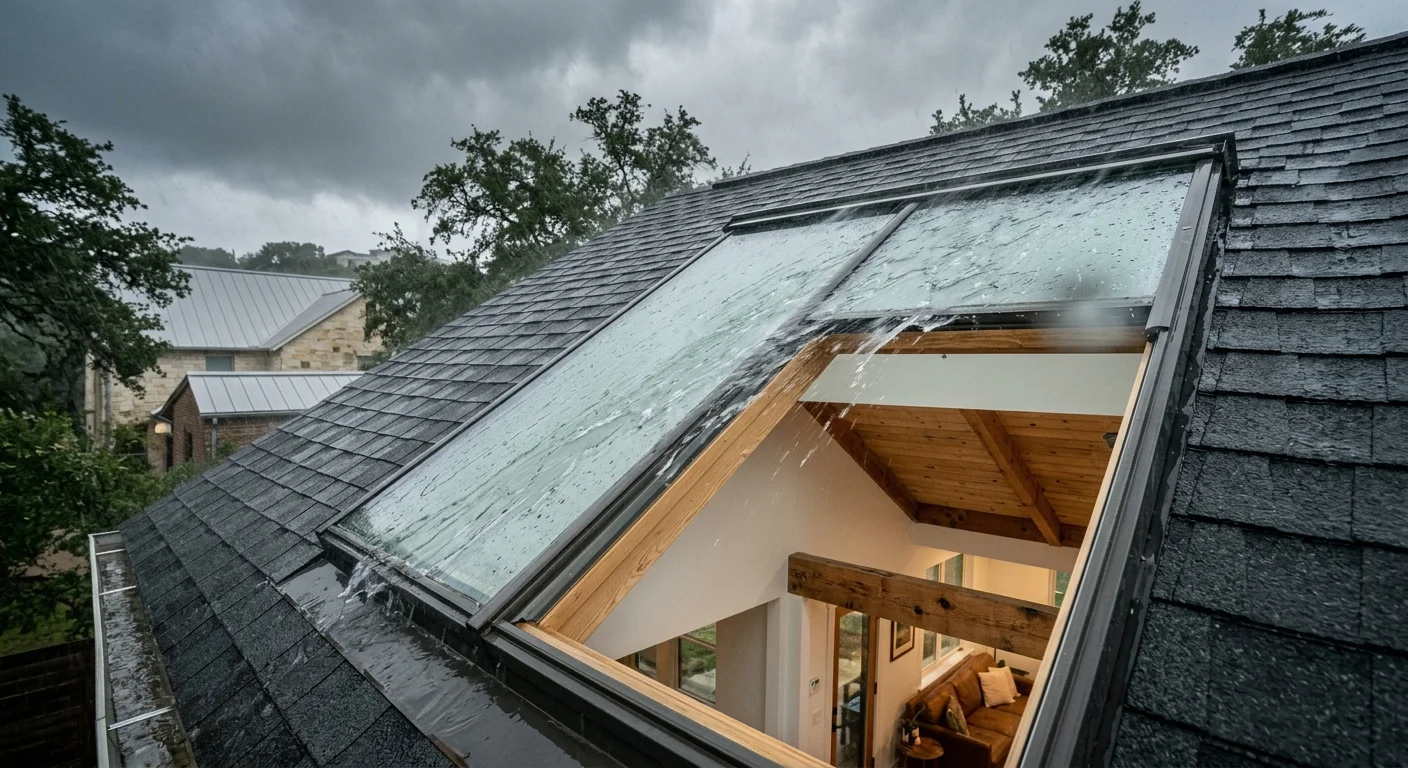
Why wind changes where rain enters
Wind-driven rain creates a different leak pattern than rain falling without strong wind. However, Bright Sky ATX’s approved claims ledger doesn’t establish one technical reason for that difference. It also doesn’t confirm a universal route between an exterior opening and an indoor stain.
That means the honest answer starts with your specific storm. Note which side of the skylight became wet first. Record whether moisture appeared along the glass, frame, ceiling opening, or nearby drywall. Those observations give an independent pro useful starting points. They aren’t a final diagnosis.
Compare the event with earlier rain at the same Austin home. A simple storm record can include:
- Where moisture first became visible
- Which side of the room faced the rain
- Whether the skylight was open or closed
- Whether nearby roofing or ceiling areas also looked wet
- Whether earlier rain produced the same indoor pattern
- What changed before the latest storm, if anything
Avoid turning one observation into a cause. Moisture near one corner doesn’t prove that corner is the exterior entry point. A leak that appears during one storm also doesn’t establish which component failed.
The useful question is narrower: what condition was present when moisture appeared? Keep that question separate from the repair decision. For a broader inspection framework, read the Austin skylight leak diagnostic guide. That page covers general leak investigation, while this guide focuses on storm-specific evidence.
Bright Sky ATX couldn’t confirm a published technical rule for wind-driven entry from its approved ledger. An independent pro must inspect the skylight and surrounding roof before assigning a cause.
How to separate flashing leaks from glass leaks
You can organize the evidence around two areas without diagnosing either one. The first area is outside the glass, including the skylight frame, flashing, and nearby roofing. The second is the glazing area, including the pane and its perimeter.
Start with the first indoor moisture you observed. Was it on the glass surface, at the edge of the pane, below the frame, or beyond the skylight opening? Take both close and wide photos. A close image preserves the visible detail. A wide image shows its position within the room.
Repeat those photos after conditions change. Keep the camera angle consistent when possible. That comparison can show whether the visible pattern stayed in one place. It still won’t prove which exterior component admitted rain.
Don’t label moisture at the glass edge as a glass failure without an inspection. Likewise, don’t label wet drywall as a flashing failure. Either conclusion would go beyond the verified information available for this page.
Instead, ask the contractor to address each area separately:
- What was observed around the glazing perimeter?
- What was observed around the frame?
- What was observed at the flashing?
- What was observed on the adjacent roof?
- Which observation supports the proposed repair?
- Were other possible entry areas examined?
If flashing becomes the stated concern, the skylight flashing repair guide can help you frame the next conversation. Use it as background, not as a substitute for findings from your home.
Ask for plain language in the written scope. “Repair the leak” doesn’t identify the suspected source. A useful scope should name the area the contractor plans to address. It should also distinguish observed conditions from conclusions.
That separation matters after wind-driven rain. The storm tells you when the problem appeared. Inspection findings should tell you what needs attention.
What to document before the next storm
Your best contribution is a clean record of what happened. Documentation doesn’t require a diagnosis, and it can stay inside accessible parts of the home.
Begin with the date and approximate time you noticed moisture. Save a screenshot of the weather conditions shown for your location. Note the room, skylight, and side of the opening where the first sign appeared.
Take photos before changing the visible area. Include the glass, frame, ceiling opening, and surrounding ceiling. If you place a container or covering indoors, photograph the area before and afterward. Record what you changed and when.
A short written timeline is easier to compare than scattered messages. Use entries such as:
- Rain began before moisture was visible.
- The first visible spot appeared beside the frame.
- The spot changed position or size.
- Moisture stopped appearing after the rain changed.
- The next rain did or didn’t produce the same pattern.
These are observations, not technical conclusions. Avoid writing “the flashing failed” unless a pro has confirmed that finding. Write “moisture appeared below the left side of the frame” instead.
Also note which skylight you’re describing. Austin homes can have more than one roof opening. Include the room name and a simple photo from across the room. That helps prevent records from different openings getting mixed together.
Bright Sky ATX serves the Austin metro across Travis, Williamson, and Hays counties. Keep the storm record tied to the home’s actual location. Don’t substitute weather observations from another part of the metro for conditions at your address.
Save any existing product paperwork you already have. Don’t guess the skylight’s age, model, or coverage. If a label is visible from an accessible indoor position, photograph it without interpreting it. The contractor can decide whether that information applies.
When repair may give way to replacement
No verified age, price, or storm threshold in Bright Sky ATX’s claims ledger determines when replacement becomes necessary. A contractor must inspect the actual opening and explain the proposed scope.
Begin by asking whether the contractor recommends a limited repair, glass work, or full replacement. Then ask what observed condition supports that choice. The answer should connect the recommendation to your skylight, not only to a general rule.
If replacement is recommended, request a comparison with the repair option. Ask what each option addresses and what it leaves unchanged. Don’t rely on an unverified claim that one path is always cheaper, faster, or longer lasting.
Useful questions include:
- Which specific component is included?
- Which observed condition led to this recommendation?
- Is a limited repair being ruled out?
- What additional work is included around the opening?
- Which materials and product details appear in the proposal?
- Who provides any stated product or workmanship coverage?
Bright Sky ATX doesn’t set prices and gives no warranties. The homeowner contracts with and pays the independent professional directly. Confirm the contractor’s terms before approving work.
If glass performance becomes part of a replacement discussion, review the current ENERGY STAR criteria for skylights. Ask the contractor to identify which product information applies to the proposed unit. Don’t assume every skylight meets the same criteria.
Replacement is a scope decision, not a conclusion you can draw from one drip. The glass replacement versus full replacement guide offers questions for comparing those paths. Your contractor’s findings should remain the basis for the final choice.
How a local pro confirms the source
A local pro should begin with the evidence from your home. Share the storm timeline, indoor photos, product paperwork, and any earlier repair documents. Explain what you observed without assigning a cause.
Ask the pro to inspect the glazing, frame, flashing, and adjacent roof areas relevant to the opening. The inspection method belongs to the independent professional. Bright Sky ATX’s approved ledger doesn’t provide a verified technical procedure that applies to every roof or skylight.
After the inspection, request a direct explanation of the findings. The explanation should answer three points:
- What condition was observed?
- Why is that condition considered the likely source?
- What work is proposed to address it?
If the source remains uncertain, ask the contractor to say that plainly. An uncertain finding is more useful than an unsupported conclusion. You can then decide whether more investigation is needed before authorizing a larger scope.
Keep the storm evidence and inspection findings in separate parts of your notes. The first records what happened indoors. The second records what the professional observed. Together, they create a clearer basis for evaluating the proposal.
Bright Sky ATX is a referral service. It matches homeowners with experienced, insured, independent local skylight professionals. Bright Sky ATX doesn’t inspect, repair, replace, or perform construction work.
When you’re ready for professional source confirmation, visit the Austin skylight repair and leak repair service page. The professional you’re matched with can review your records, inspect the opening, and explain the recommended scope.
When to call us
Call when a wind-driven storm produces moisture around your skylight and the entry point remains unclear. Bright Sky ATX can connect you with an experienced, insured, independent professional serving the Austin metro. Call us at (737) 477-8898 and we will match you with an experienced, insured local pro.